
Summer Break: Breaking the Scorecard - What Comes After Success
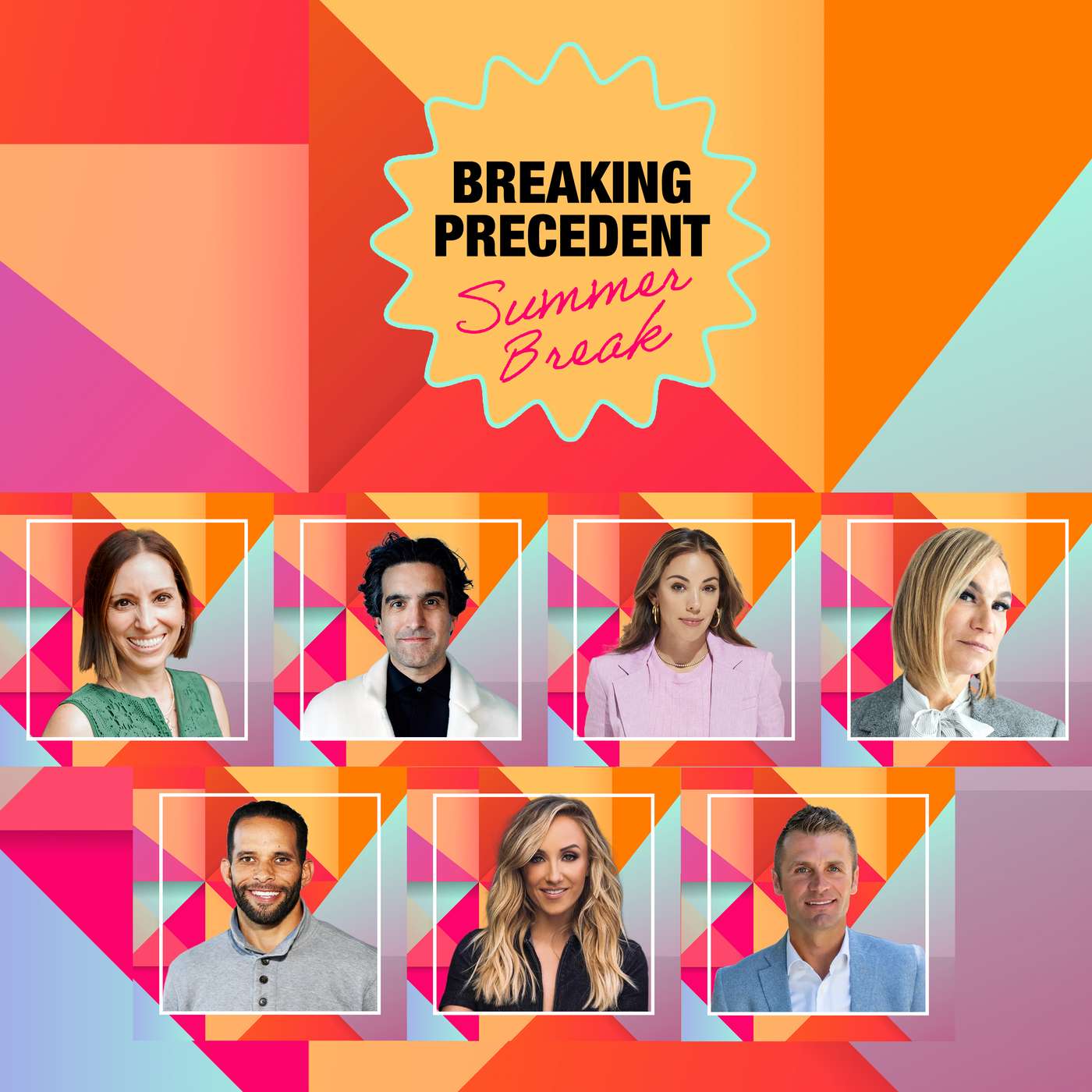


This special summer episode of Breaking Precedent asks the question success does not answer for you: now what? Across Olympic competition, company building, professional sports, venture-backed startups, and personal reinvention, the episode traces what happens after the medal, the acquisition, the stadium, or the thing you built no longer defines your day.
Nastia Liukin reflects on standing on the Olympic podium and feeling the fear that can arrive inside a moment everyone expects to feel only triumphant. Leah Solivan connects that feeling to the sale of TaskRabbit to IKEA, when a dream outcome also meant letting go of a company that had become part of her identity. Austin Allison talks about the constant pull of the next mountain after Zillow and the long path toward Pacaso. Ryan Nece describes the withdrawal from professional football, the fight with ego, and why building a startup was harder than being on the field.
Julie Rice adds the emotional disorientation of leaving SoulCycle and learning what it means for a brand to live beyond its founder. Bianca Gates shares how Birdies began through imperfect first steps, good-enough prototypes, and the decision to keep walking before everything was figured out. Andy Dunn brings the theme to its deepest edge, naming the way identity can become a mask and how the second half of life asks us to take it off.
Together, these conversations make the case that achievement can be meaningful without being complete. The real breaking point comes after the win, when the old scorecard stops working and the next chapter has to be built from something deeper than applause.
Key Insights
Success can create a new kind of uncertainty because it removes the goal that once organized your life.
A medal, title, company, relationship, or salary can be meaningful without being the thing that defines who someone is.
For founders, selling a company can feel like both relief and grief, especially when the company has become part of the founder's identity.
Ambition can inspire risk, sacrifice, and leadership, but it can also make every milestone feel insufficient.
The transition out of professional sports can feel like withdrawal from significance, spotlight, and structure.
Perfectionism can help someone reach excellence, but the same pattern can become limiting when life no longer has a clear scoring system.
Reinvention does not always require a perfect plan. Sometimes it starts with a good-enough first version and a willingness to keep walking.
The work after success is not only about building again. It is about learning how to live without needing the old role to prove your worth.
Timestamps
00:00 The Question Success Does Not Answer
00:33 Nastia On The Podium Now What
02:02 Identity Beyond Winning
02:26 TaskRabbit Exit Emotions
06:29 Achievement Withdrawal
08:18 Zillow Exit Next Mission
11:15 Retirement Feels Empty
12:04 Athlete Withdrawal Ego
14:16 Perfectionism Unlearning
16:44 Life After Scoring
17:40 Startup Harder Than Sports
19:43 SoulCycle After Leaving
22:11 Peoplehood Relational Health
24:28 Birdies Done Better
28:27 Leap From Facebook
31:40 Taking off the Mask
Featured Voices
Nastia Liukin, Stacy Brown-Philpot, Austin Allison, Ryan Nece, Julie Rice, Bianca Gates, and Andy Dunn.
Connect with Leah
Website: https://www.breakingprecedent.com/
Instagram: https://www.instagram.com/leah_solivan/
X: https://twitter.com/labunleashed
Now What - AUDIO Compilation (rough assembly)
[00:00:00]
Speaker 21: We talk a lot about the climb, the ambition, the sacrifice, the discipline, the moment when all the work finally pays off. But we [00:00:10] talk much less about what happens after. After the medal, after the acquisition, after the stadium goes quiet, after the thing you've built [00:00:20] or become is no longer the thing that defines your day. This episode is about the question success does not answer for you: [00:00:30] Now what?
Speaker 22: Yeah. But then there's, you know, the perfectionism and when you achieve something at such a young age, and I remember all of a sudden on the podium, being [00:00:40] kind of scared and having. This fear of, wait a second. Okay. I'm supposed to be like really happy. And I was, wow. Yeah. But I had this like conflicting feeling of, okay, [00:00:50] but now what?
Speaker 3: In my mind, why would they clap or cheer for me if I'm falling on my face?
Mm-hmm. No one wants to clap or cheer for that. You want to clap and cheer when somebody does. Great. And so up [00:01:00] until that moment I thought that people were only going to love me because I was the best, you know? Mm-hmm. Mm-hmm. And when I fell. Mm-hmm. Mm-hmm. And then when I got back up and I finished my [00:01:10] routine and they were on their feet, I didn't realize it then.
But it became the defining moment because what I realized was there's, people are still gonna love you and support you and [00:01:20] cheer for you even if you fall on your face. Mm-hmm. Mm-hmm. It's not about the outcome, it's about picking yourself up. It's about, you know, finishing what you've started and landing on your feet after, because we're all [00:01:30] going to either figuratively or literally.
Yeah. Fall on her face in life. Absolutely. And how do you pick yourself up and how do you keep going? Like you have to do that. [00:01:40] You can't just crawl underneath the podium as much as you want to and hide the courage and. I think strength, both mentally, physically, emotionally, in front of millions watching [00:01:50] it was a very vulnerable moment.
Um mm-hmm. It's probably best. I didn't process it then 'cause I just wanted to like, I had third Right. I remember thinking like, oh my God, 28, 29. I was like counting my [00:02:00] head and it just really, truly made me realize that we will never be defined by. A salary, a title, A [00:02:10] relationship. Mm-hmm. A company, a gold medal.
Like none of those. Yes, they're incredible things, all of them. But they don't define who we are. Right. It's, they're just something [00:02:20] that we've done. It's not who we are at the core.
Speaker 21: When Nastia says she stood on the Olympic podium and thought, "Now what?" I felt that in my bones. [00:02:30] My version was not a podium. It was a board call. It was selling TaskRabbit to IKEA, a dream outcome by every rational measure, [00:02:40] and still, I felt this deep grief because I was not just selling a company, I was letting go of my identity.
Speaker 5: [00:02:50] Okay, so I'm gonna ask you if you remember the day that we sold TaskRabbit to IKEA, because- Mm-hmm
I've mentioned this, I think, on the podcast before. I [00:03:00] remember this board call. It was me and you and Barry and Todd and Rob, I think. And it was, like, the final vote. [00:03:10] What do you remember about that board call? Do you remember it?
Speaker: I remember you went last, if I remember correctly.
Speaker 5: Yeah, I did.
Speaker: And that was it.
[00:03:20] And I don't know if you remember, but a couple days before, we had some challenges with the deal negotiation-
Speaker 5: I do ...
Speaker: that almost blew everything up, but [00:03:30] got it back on track and-
Speaker 5: We were like, "Stacy, you need to call someone."
Speaker: Yes.
Speaker 5: Yeah.
Speaker: It was really a moment of truth, [00:03:40] honestly- Mm-hmm, mm-hmm ... where it was like, okay, this deal might not get done.
Speaker 5: Yeah.
Speaker: So once we cleared up that issue, we were now ready to vote on the deal, [00:03:50] and it was a call. And you were the last person to go and, and I was like orchestrating, everyone has to like vote yes, vote yes. And that's what I remember, and I [00:04:00] remember wondering, like, how you felt in that moment. Yeah. Because I know I was, I had [00:04:10] gone from excited to do this deal to, oh, Lord, it's not gonna happen and-
Speaker 5: Mm-hmm
Speaker: Leah and the board are not gonna be happy if this deal doesn't happen since we [00:04:20] worked so hard on it. Yeah. To 48 hours later we're now voting on the deal, so there's a sense of relief that I had- Yeah ... that we had gotten to an [00:04:30] outcome that worked for everybody- Yeah ... including the employees at the company-
Speaker 5: Yeah
Speaker: which are often forgotten. And- [00:04:40] I was wondering how you felt.
Speaker 5: Oh, gosh. Um- Were you proud of
Speaker: me? Were you... Well, you
Speaker 5: know. Oh, my God, yes. What
Speaker: was the... You know, what was
Speaker 5:
it? Yes. I do [00:04:50] remember feeling a lot, and I remember everyone going around one by one, and I went last, like you remember. And I just remember everyone saying something really [00:05:00] nice before they voted.
Like, you know, Barry was like, "We've been on this journey. We're so proud of you two. Thank you." Like Todd, right, Rob Chesney, [00:05:10] who, you know, we just love. He was our independent board director and operator, came from eBay, right? Mm-hmm. Like, he really understood how hard we fought for this [00:05:20] business. And you, like you said, had to do a lot of heavy lifting to get this deal done.
And so when it came to me, [00:05:30] and I had heard everybody's comments, I sensed your relief. I was also relieved. I was also... It was like this weird sadness [00:05:40] because- Mm ... it was over. For me, it was really over because I was on the board at that point. You were CEO. Mm-hmm. I was no longer gonna have any sort of [00:05:50] connection, you know, financially or whatever to this business.
It was emotional. It was emotional. Yeah. I mean, it was like a decade of my life, right? But I was so proud of you. I was so [00:06:00] grateful to you, Stacy. I mean, honestly, like I said, when you came in, we were 60 people. And we were just, like, trying to figure out how to get [00:06:10] this business to thrive, and you did. You came in and you partnered with me and the team and the board, and you did that.
And so I was so [00:06:20] grateful, so proud, ah. And but it was a lot. It was a lot of emotions. Yes. Yeah,
Speaker: yeah.
Speaker 5: It was a big moment.
Speaker 21: And this is the part [00:06:30] people do not always understand from the outside. Achievement can become a kind of operating system. For founders, for athletes, for anyone who has [00:06:40] organized their life around becoming excellent at one thing, the end of that chapter can feel less like freedom and more like [00:06:50] withdrawal.
Austin: I would say I was always in a constant state of.
Dissatisfaction with my [00:07:00] current circumstances. Okay. And you know, this is still something that I'm even cognizant of today On some level. I think almost everybody's guilty of this at different points in [00:07:10] their lives. But you know, if you're ambitious and you have intentions to have an impact and build things that have meaning, it's [00:07:20] hard to not always be looking for the next mountain to climb.
So even when you achieve certain milestones, I'm constantly like, oh man, it's just not enough. You know? [00:07:30] Now I'm onto the next thing. So yeah, that definitely existed when I was young. If I were sitting in my 15 or 16-year-old [00:07:40] shoes. Looking at where I'm at today, I would say that where I'm at today is probably above what I could have imagined when I was 15 or 16.
[00:07:50] Ironically, even though still today I look at myself and I think I could do so much more and I intend to do so much more. So it's sort of hardwired inside of me, and I think some [00:08:00] element of that is healthy, right? It's what like inspires us to take risk and make sacrifices and work really hard and inspire other [00:08:10] people to follow our mission or vision, but it's also a dangerous thing inside of you.
I try to remind myself basically live in the moment as well
First, lemme [00:08:20] talk for a second about Zillow. So, Zillow bought the company for about $120 million and all of my founder friends told me, you're not [00:08:30] gonna last.
You know, nobody ever lasts at the acquiring company. Yep. You know, I give it six months at the most. I ended up staying there for like three [00:08:40] or three and a half years. And the reason why I stayed there and really enjoyed my time there is because I really believed in the [00:08:50] mission, and I really, even more than this was, I really admired the people I was working with, the founders of the company, Lloyd and Rich.
And Spencer, who's now my [00:09:00] co-founder in Picasso and, and the whole executive team, they were just like top-notch, super smart, super hardworking, and many of them were like [00:09:10] 10 or 15 or 20 years ahead of me In my career and surrounding myself with great people has been such an important ingredient. For [00:09:20] success that I viewed this as like the ultimate opportunity to be surrounded by great people where I could learn as much as possible.
So I stayed on a Zillow for quite a [00:09:30] while, and frankly, if there would've been a path for me that aligned with my career goals and aligned with Zillow's business needs, I might still be at Zillow today because I admire the people [00:09:40] so much. But it just reached a moment in time where that path, you know, wasn't there.
Meanwhile, the other thing that was really important is goes back to this [00:09:50] idea of, of having a problem that you're really passionate about and. I wanted to wait to start a new company until I had a, a problem that was [00:10:00] just really eating me from the inside out that I just couldn't stop thinking about that I really believed in.
And this Picasso thing was something that I had been thinking [00:10:10] about. I sold in 2015, left in 2019, but the Picasso idea really sparked originally in 2013. So even before mm-hmm. I sold the Zillow. Oh wow, really? [00:10:20] Yeah. That early? Yeah. Yeah. When I bought my second home. So I had been thinking about versions of this idea for a long time.
Mm-hmm. Mm-hmm. In fact, I even pitched some versions of this idea to the [00:10:30] Zillow guys, you know, early on, and they were just like, ah, you know, we don't really wanna be in the vacation home space. So, yeah, I'd been thinking about it for a while and it's just reached a moment in time where I'm like, I gotta go [00:10:40] do this.
I love this idea. I love this opportunity. The second home has changed my life and I want to change more people's life. So, yeah, it's just, it wasn't [00:10:50] even a question. Although I will say I had one experience when I left Zillow. A couple of my friends told me, you have to take time off. I recommend a year [00:11:00] before you start another company.
Mm-hmm. And I heard that from enough people that I thought, okay, you know, pattern recognition, these are smart people. That seems like good advice. Right. So I'm [00:11:10] gonna do that. I'm gonna not start another company for a year. Yep. And I left Zillow, we lived in Europe for a summer. The first 30 [00:11:20] days were kind of interesting.
You have all this free time, you can go cycle, you can go to the coffee shop at 11:00 AM and just hang out and read a book. You know, it was kind of [00:11:30] cool for the first 30 days, but by the 30 day marker, I was like. This sucks. You know what I mean? Like the credit card, because this is like what it would feel like to [00:11:40] be retired, right?
Leah: Right. Yes. And I'm like, this feeling of retirement sucks. I know I don't wanna do this because all the people in my community are doing interesting stuff. It's like, yeah, [00:11:50] yeah. They're out building things, working on things, solving problems, and I'm out doing three hour bike rides during the day, so I'm like, this kind of sucks.
Austin: So I know [00:12:00] I want to go back to work and solidified that decision in my mind.
Leah: Yeah.
Austin: I mean, one, you don't realize that you're addicted to this drug.
Like [00:12:10] a lot of drugs, you, nobody's like, "I'm addicted."
Leah: Right.
Austin: You gotta go to a lot of help to realize, like, I'm- Yeah ... in, to, you know, to acknowledge that. And-
Leah: Yep ...
Austin: over [00:12:20] time, this drug of feeling significant, of the spotlight, of the energy, of what it means to be a professional athlete, it is [00:12:30] amazing, and it is endorphins that, that are released in this euphoric state.
You feel really significant. And-
Leah: Mm-hmm ...
Austin: then you step away from the game, and you think [00:12:40] you're gonna continue to feel that, and that's not always the case. And- That was probably one of the hardest things to go through, and it's like withdrawals. You know, [00:12:50] you scratch and you crawl and to try to feel significant and feel relevant and to feel Like, you're important, and, because you felt [00:13:00] that.
And so that part I had to learn how to wrestle with. And one of the things- Yeah ... for me was I quickly learned one of our biggest, [00:13:10] my biggest enemies was my inner me. Yeah. And my inner me is my enemy, and that ego, figuring out how to quiet the ego [00:13:20] or even try to remove the ego from when I was making decisions or choices in my career and my life and partners, those are the things that gave me a lot more [00:13:30] peace, especially long-term, when I could recognize I was fighting against something inside of me that I wanted that wasn't healthy, and that took time.
Speaker 3: but growing up in [00:13:40] Texas and it's, everyone was so proud and excited, which I'm so grateful for, but it forced me to stay in this identity, you know? Yeah. Of just being defined by that.
And so then moving to New York, I had [00:13:50] no friends. Know, I knew nobody. I was starting like had been seven years since I even was in school. And I just remember looking at the graphing calculator and being like, [00:14:00] what is this? Yeah. So I think, yeah, it was, it's a lot like truly. Yeah. Yeah. And I think all these aspects, all of that goes into it.
And I know that's [00:14:10] kind of like such a generic, broad answer, but it's no, there's not one thing that.
trying to be perfect.
Perfectionism is such a [00:14:20] fine line. I think so much of trying to be perfect gets us to achieving those things, but at the same [00:14:30] time, it can be debilitating. In so many ways in life. Mm-hmm. And you know, I've experienced it myself, starting things that you [00:14:40] didn't train seven hours a day or six days a week for your whole life.
Right. For years too. For years. And it can be scary, right? Mm-hmm. So it's scary for multiple reasons, but that's why, you know, [00:14:50] again, trying to understand like why is it scary? Mm-hmm. Is it because you're like scared you're gonna mess up or fail or whatever? Or is it the unknown? And it's not that I like [00:15:00] need to be perfect.
I don't need people to think that I'm perfect. It's this level. This bar that I've kind of set for myself. Why do something if you're not gonna do it like to your [00:15:10] best? It was the way I was raised. Yeah, it was and, and I don't blame or fault anybody. It was just, I knew that I had to do that in order to achieve the thing that I wanted to [00:15:20] and it worked.
Yeah. So in my mind I'm like, well, if it worked, then why wouldn't it work for other things? Why don't I keep doing that? Yeah. And I can't really do that, but I think I've started to kind of tell myself, you [00:15:30] know, sometimes. Done is better than perfect. Yeah. And that has helped me a little bit. The perfectionism in whatever is still [00:15:40] at the core.
Like I have to, yeah, constantly tell myself like, it's okay, like to let things go. Mm-hmm. Again, it's not for somebody, it's not for like a, you know, an image or anything. It's [00:15:50] so instilled in me, like, if you're gonna do something, do it well, and then just not. Doing well with, you know, not achieving something that you wanna do.
[00:16:00] Everything was in my control. Mm-hmm. And if I had a bad competition and if I didn't win, like that's on me. Mm-hmm. I know what I need to do to go back the next [00:16:10] time and to win. And that doesn't necessarily work for everything else in life when you know, it just doesn't. And I think that I've had to really unlearn that [00:16:20] part and know that that's not life I learned so much.
Through my career and through gymnastics, that has obviously helped me in so many ways. When you do something for over 20, 23, 24 [00:16:30] years, it's not just like something you think or do, it's ingrained in you. It's kind of who you are. Yeah. So trying to not necessarily change fully who you [00:16:40] are, but teach yourself other things too.
Speaker 2: Yeah. Bringing your best self to something doesn't mean that you have to be perfect. Winning. Yeah. So, yeah, I love that. I mean, you have launched a [00:16:50] brand, a competition, a community. What is driving you now that winning isn't the metric or getting scored. Yeah, isn't the metric. Thank [00:17:00] gosh, actually
Speaker 3: it's such a relief.
The score. Yeah. It's funny because the perfectionism obviously never fully went away, but the scoring. Mm-hmm. Like to the point where SoulCycle [00:17:10] and Flywheel like. I could not do flywheel because there's a scoreboard at the top and everyone's trying to win. And SoulCycle, yes. Like when I lived in New York and SoulCycle, like, you just go in [00:17:20] and you do it for yourself.
I'm also also a
Speaker 2: SoulCycle girl. Yes, yes. And
Speaker 3: so both great places, but I remember like, this is not for me. And then to everybody sees your [00:17:30] score and then people expect you because you're an athlete. Yeah. I was just like, this is is not for me. It's funny. I'm not very competitive anymore. Of course we all wanna be the best and [00:17:40] win at like, you know, little things, but I'm fine with not being the best.
Austin: By far the hardest thing that I've ever done. You know, two guys and a napkin. Yeah.
Shout out to my co-founder, Jeb Terry, [00:17:50] who runs- Yeah ... an amazing company now called Cosm. But- Yeah ... I mean, really, really hard. And-
Leah: Harder than football?
Austin: Oh, yeah. Yeah. I, I was working at [00:18:00] a family office after I was done and trying to learn the, the ropes of being in business. Mm-hmm. And my, uh, business partner comes to me, Jeb, and says, "Hey, I got an idea.
I think you could [00:18:10] help me." We decided to take that idea and turn it into a business. I, you know, took the leap of faith. You know, I didn't have any... I was a single guy. I could do, live, be wherever I needed to be. [00:18:20] Let's do it. Mm-hmm. Let's make it happen. And- Yep ... we decided to start doing that. And, you know, for four and a half years, all we did was that.
[00:18:30] 24/7, 9-9-6- Yep ... you name it. Yep. We were cranking. Yep. And it was so hard, and I would much rather run down... To answer your question, was it harder for... I would run down the football field [00:18:40] and hit 300-pound linemen over and over again than- Wow ... have to deal with those early days of building something from scratch.
Hmm. Because you gotta know how to be the accountant [00:18:50] and the marketer and the l- legal team. You're doing all these things that have nothing to do with your expertise or why you were even building the business, but that's the minutiae of what's needed [00:19:00] to build businesses and why you're building and hiring and figuring it out.
I think it was Reid Hoffman that said, you know, when you're building a startup, it's like a plane going off a cliff that's unassembled, and [00:19:10] you're trying to assemble the plane to- Totally ... get it to fly before you, you know, hit bottom. Yes. Yes. And you're scrambling. And-
Leah: Yeah And most of those planes crash.
Austin: Most of them [00:19:20] crash. Yeah. And you know that, and yet you- Yeah. And you know that ... despite that, you keep going. Yeah. And, you know, we were stubborn and relentless, and- Yeah ... we found a way to get a [00:19:30] soft landing for our investors and for our team and-
Leah: Yep ...
Austin: that was really what brought me back into the world of tech.
But how am I gonna spend the next 11 months? [00:19:40] 'cause I committed to myself to not doing this. I don't wanna be miserable for 11 months doing nothing.
Speaker 21: Julie Rice adds another version to this question. What happens when the thing you [00:19:50] built became not just a company, but a feeling people organize their lives around? After something like that, the next chapter is not just about finding another [00:20:00] idea. It's about learning who you are when you are no longer inside the first one.
Julie: SoulCycle was my third child. And so, you know, leaving that business was [00:20:10] really emotionally a difficult time. I will say it was completely disorienting and I remember when Elizabeth and I made the decision to leave, I said to her, okay, we're gonna [00:20:20] do this, but you know, on our, before our last day, you know, I want you and I to go find a small office somewhere so that on Monday we know where to go.
You know, and we did. We went and we [00:20:30] got a little office and before we left the building that Friday, we knew where we were gonna go on Monday. And at least, at least sit there, you know? And with steam coming out of our ears trying to think of some new ideas [00:20:40] and eat lunch together. And that's what we did.
Leah: So great. It's so great. No, that, I mean, that totally resonates and I think for me, and probably for you as well, but I'd be curious to hear what you have to [00:20:50] say. It's like being able to see the brand live beyond you and without you. But still have all that [00:21:00] same culture and goodness that you seeded and you created.
I mean, it has to feel pretty good to look around and still see SoulCycle and fanatics [00:21:10] and you know what you've built live on.
Julie: Absolutely. You know, I think that, you know, Eli Elizabeth says it all the time, and I think SoulCycle was really about [00:21:20] love, and especially in a world that is so crazy for people to have a place where they can go for an hour no matter what [00:21:30] people's politics are, or opinions or you know, what city they live in.
For people to go someplace for an hour and just support each other and give each [00:21:40] other the benefit of the doubt and be there consistently and show up. You know, I can count on the person, you know that's gonna be on bike seven and nine as much as I can count on my two best friends [00:21:50] to show up. And I think that is a real comfort in our world.
And it's awesome. You know, it is awesome that it's that it still goes on [00:22:00] and as a fanatical. Founder who, you know, liked a brand to look and feel a certain way. It's, in many ways it's also hard to look at.
Leah: Yes, I [00:22:10] can also understand that. Yes. End. I get that too. So you two could have done anything or nothing after SoulCycle, but you got [00:22:20] your office together that Monday morning, and now you're working on a company called Peoplehood.
Can you tell us about Peoplehood?
Julie: Yeah, look, I think Peoplehood was really born [00:22:30] from exactly what we're talking about. I think that, again, when you talk about breaking precedent, it feels like, you know. In [00:22:40] 2025, we finally understand that if we want to be in good physical health, we need to consistently exercise our bodies and eat a certain way.
If we [00:22:50] want to have good mental health, we need to figure out ways, whether it's through meditation or therapy, or you know. Breath work, [00:23:00] whatever it is, we need to consistently practice something to be healthy mentally, and yet there's this missing piece of what we need to do to nurture our [00:23:10] relationships.
For whatever reason, we think, you know, we'll get married and we'll just know how to be in love forever. We'll have children and we'll just understand what it is to be a [00:23:20] parent. We'll get our first jobs and we'll understand office politics. And so this idea of relational health is something that has been very interesting for Elizabeth and I.
We've spent a [00:23:30] lot of time, like I said, working on our own relationship. I've spent a lot of time working with some really interesting people on my relationship with my husband, and so we [00:23:40] decided that we were going to create a one hour experience with. Guides that are like SoulCycle instructors with music and breath work and community.
[00:23:50] But it's a one hour conversation experience where, you know, we, what we do is we teach people to listen to each other. It's really about being in a circle of [00:24:00] people where you practice active listening, and the idea is that, you know. If you do this consistently, you know, we can [00:24:10] change our habits, we can change the way that we hear other people's stories, through the way that we listen.
We can change the dynamic of the relationships we're in. We can change the [00:24:20] air in the room at our dinner tables, in our classrooms, and all of those things. And so that's what people hit is,
Speaker 21: Bianca Gates brings this question into a different register. [00:24:30] Her story is about ambition, identity, motherhood, partnership, and the parts of yourself that become louder when you finally give yourself [00:24:40] permission to build. The now what moment is not always after the ending.
Sometimes it happens when you realize the old version of [00:24:50] yourself is no longer big enough for the life you are trying to create.
Bianca: Why don't you go see if you go there and maybe you can learn something. And I remember thinking there's a trade show [00:25:00] in Vegas.
I'm in, I love Vegas fun. And it was like the following month. And so Marissa and I went to that. Turns out we learned nothing there. We were overwhelmed, but you know, we were like, this is exciting and fun. [00:25:10] Let's keep going. And she turns out that one of her neighbors. Had somebody move in next door in Sacramento who had just retired after 30 years in the footwear business from [00:25:20] LA moved to Sacramento.
And so we got connected to him and he's like, listen, I'm retired now, but I have relationships overseas with factories. If you want a shoemade, tell me what you're [00:25:30] thinking and I can help you. Them be made. And we were not in a position to like interview the best person for the job. We were just like, great, great, let's do this
And so he said, all I need [00:25:40] is like a sketch of the product you want them to make. And so I was like, well, I don't sketch. Neither does Marissa. So her landscape architect, no way us a shoe. And [00:25:50] we had cut up a bunch of shoes and we taped them together to say, we want the component of this in here and this, we want to tweak.
And we want it to kind of look like this, but we want this soul to be like this for these reasons. [00:26:00] And so we sent it to him and his factory oversee was able to make it good enough. It was not perfect. We had to come up with a name for the company and we [00:26:10] came to birdies birdies. com was not available. So we bought birdies slippers.
com and again, good enough. Like nothing had to be perfect. We could always rename the company later. Redo the logo later, [00:26:20] make the shoes better later, but done is better than perfect. About eight months later, we got the shoes. Marissa got a notification that the shoes were literally outside of her house.
We had given them her home address. We had [00:26:30] no warehouse and there were 1800 shoes. Oh my gosh. That she had to put in her garage. And she calls me up and she is like, you're not gonna believe what the shoes are here now what? We [00:26:40] had never thought through how to actually sell the shoes. We never thought we would get the shoes.
And then we were like, well. between the two of us, we have 1800 friends on Facebook. Why don't we just [00:26:50] post on our Facebook pages that we're launching this company. We'll throw up a few pictures on our Shopify website. And this is crazy. I just hope everybody buys one. We [00:27:00] recoup our money and we're done.
Like, I can't believe we actually got this far.
Leah: Is Facebook okay with this? This is like goes from moonlighting to, Oh, actually I have these shoes I [00:27:10] need to sell. I did have to disclose
Bianca: to my manager once we were going to put up on Facebook because honestly, I never thought we would get this far. Right, right.
I never thought this was going to be a legit business. [00:27:20] This was kind of like, Things were working, like step one was leading to step two to step three. And you're like, all right, let's just keep walking and see how far this journey takes us. And then once we hit [00:27:30] the wall, we'll end. And so we launched it in November of 2015, which was when we got the shoes, but it turns out it was the perfect time to launch the social slipper around [00:27:40] Thanksgiving.
You know, what do you wear at home? Everyone's traveling home. And so that really was a light bulb moment for a lot of people. And that got others buzzing and others talking and [00:27:50] Facebook, honestly, like they were so cool about this and proud that they ended up inviting me to not only speak to the New York office about entrepreneurship as an [00:28:00] employee there, but also had me selling my shoes on campus.
It's amazing. To other employees. And one of those employees ended [00:28:10] up leaving a few years later to go become a venture capitalist at Norwest who ended up leading our A round. Incredible. You can't plan these things. You just got to put yourself out
Leah: there. [00:28:20] Wow. And so you decide to launch the company fully with the shoes.
You're selling the shoes. You're selling them on Facebook as well. One thing I think that's really key [00:28:30] and really interesting is you were in this role at Facebook. That worked with traditional retailers like Nordstrom and others, and you saw them missing [00:28:40] this massive opportunity for sales that you knew you could capture with a DTC company, right?
Bianca: Yeah. They were missing a huge opportunity [00:28:50] and I think part of it was because their organizations were not set up for a channel like this. You had your digital channel bought by traditional digital media companies, [00:29:00] yet your traditional agency is doing TV and print. But there was nobody really owning this new technology, this new media platform.
And so [00:29:10] part of it was either learn something new or hope that it goes away so you don't have to. And I think a lot of them were like, ah, this isn't going to be around for a while. I don't need to learn it. I don't [00:29:20] need to figure this out. This is another startup that's going to go bust kind of thing. And I was like, wow, this is unbelievable.
Like they have no clue that this is really going to [00:29:30] take over the world soon. And that's what gave me the confidence to just be like, wow, if I could leapfrog these legacy retailers who can't get out of their own way, they are so inflated with people, like whose job is it to [00:29:40] figure this out? Right.
Everyone's kind of looking at each other. And here I was, I could just take anything and. Leapfrog via technology to getting this product [00:29:50] into consumers hands faster than they could figure out who's going to do this. So I did that gave me the confidence to just go for it. And it was working. My manager [00:30:00] was concerned that I was not going to give it all at Facebook.
But what's interesting is I felt like I really had to crush my job at Facebook so that they wouldn't be [00:30:10] concerned about my night and weekend hustle, but my full time job at Facebook. was teaching me a lot about the ins and outs of running ads for my [00:30:20] own company. So it kind of all fed each other. And during that time I ended up selling the first ever big Instagram buy with my client, [00:30:30] Banana Republic, which is owned by Gap Inc.
Because I think I was so passionate about leveraging the platform to sell product that it came through in my sales pitch to them. And they were one of the first [00:30:40] on Instagram when Instagram finally opened up to And so it, yeah, like they, both of my jobs fed each other. And it wasn't until 2017 that I had to make the [00:30:50] decision to leave my job at Facebook because there was so much investor interest in the company.
And I knew that we could probably move a lot [00:31:00] faster if we raised some capital, but I also knew that I couldn't take people's money if I had a full time job that was not. running the company they were investing in. And so in 2017 I had [00:31:10] a conversation with Cheryl. I really admired her and respected her and I was somewhat hoping she would say, you have an amazing opportunity here at Facebook, like don't leave.
And instead she [00:31:20] said, this is an amazing opportunity for you. You're going to crush this. Not that it is never going to work out, but if you ever choose to come back to Facebook, we will always have you back. So you're not [00:31:30] giving up anything. It's amazing. And so that was the encouragement that I needed.
And I just said, you know what I'm in, let's do this. So I left in the middle of 2017
Speaker 21: And Andy Dunn takes us to the most [00:31:40] vulnerable edge of this theme, because identity can drive us, but it can also trap us. When the role becomes the self, when the company [00:31:50] becomes the proof that you are okay, success can hide pain instead of healing it.
Andy: There are these things that come to us in life that we don't [00:32:00] want. It's like the dark visitor at the door. with the bad news. And the normal frame is like, slam the door. But the inverse is [00:32:10] invite that agent of doom into your home and sit down and have a conversation because you don't know what it means yet.
You don't know what's bad news or good news in your life until [00:32:20] later. And there's a lovely book called Falling Upward by Richard Rohr, who's a Franciscan friar. It's actually the only book that I had space for whatever reason to read while I was [00:32:30] writing my book. And he basically says that by the time you get to your 45th birthday, by definition, there is something that has happened to you in your life.
That you did not see coming [00:32:40] or you didn't spend time anticipating that turns your life totally upside down. That just crushes you and that feels like I didn't want this [00:32:50] or this was never going to happen to me. It can be a divorce. It can be the loss of a loved one. It can be so many things, professional, financial ruin, but something pretty bad that feels bad and [00:33:00] that the secret to having a good second half of your life is to embrace what that is.
And make it a part of your identity, internally and [00:33:10] externally, that he refers to as taking off a mask. That we spend the first half of our lives constructing an ego, because it's in our nature. We're looking to mate, we're looking [00:33:20] to gain status. Whether we do those things or not, we're looking to self express.
We're looking to figure out who we are to express our identity. But it is a [00:33:30] mask. It is not your soul. It is a mask that you've constructed to define who you are, to tell yourself who you are. And it's the mask that the world now sees you through. And the goal of the [00:33:40] second half of your life to become, he always refers to the elders, like to become like an elder that is of great service to the community,