
Break the Backboard: Festus Ezeli on Championships, Reinvention, and Life After the NBA
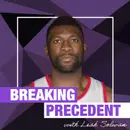


What happens when the kid who scored his first basket on his own team becomes an NBA champion, and then has to start over again?
On Breaking Precedent, Leah Solivan talks with former Golden State Warrior Festus Ezeli about a journey nobody could have scripted. Festus grew up in Benin City, Nigeria, finished high school at 14, and moved alone to Yuba City, California, to live with his uncle and chase a dream of becoming a doctor. Strangers kept asking the 6'4" teenager if he played basketball. He didn't, until he scored his first basket on his own team and got cut from his high school team. With a mentor who believed in him before he believed in himself, he embraced being a beginner, turned down Harvard for Vanderbilt, switched from pre-med to economics, and became a first-round NBA draft pick. He shares what he learned from Steph Curry's early-morning work ethic and a Warriors team where nobody cared who got the glory.
Then came the injury: early retirement and six months in a wheelchair, a year after playing in the NBA Finals. Festus opens up about his mom's lesson on moving mountains, finding his voice again in media and storytelling, and the work he's building now: schools in Nigeria and Sacramento, leadership and basketball camps in Africa, Festus Feasts and The Vision Table supporting local restaurants, and his push to rewrite what life after sports can look like.
Key Insights
- Being a beginner can be a superpower when it makes you listen and do whatever it takes to improve.
- Sometimes you have to believe in someone else's belief in you until yours kicks in.
- Greatness lives in small daily habits that nobody sees.
- It's amazing what can be accomplished when nobody cares who gets the glory.
- A career-ending injury doesn't have to be a life-ending one. The skills transfer.
- Privilege comes with a responsibility to create opportunity for others.
Timestamps
00:00 Cold Open: “God Gave You Your Mountains”
01:10 Leah’s Introduction
02:40 Welcome and Reunion
03:10 Ballet Night Backstage
04:20 Bread and Tea in Nigeria
05:55 Growing Up in Benin City
08:15 The Tortoise and the Hare
09:40 The Meaning of Ifeanyichukwu
11:10 Moving to America Alone at 14
15:40 “Do You Play Basketball?”
17:20 Scoring on His Own Team
18:40 The Mentor Who Believed First
20:40 Being a Beginner as a Superpower
22:40 Turning Down Harvard for Vanderbilt
24:45 Choosing Basketball over Medicine
26:40 Two-Time Most Improved
27:45 Trusting Your Intuition
28:40 Steph Curry's Work Ethic
31:05 Nobody Cares Who Gets the Glory
32:00 Injury and Early Retirement
32:55 Finding Joy in Storytelling
36:15 Six Months in a Wheelchair
37:10 “This life is short, and it's our job to take advantage of the moment while it's here.” — Festus Ezeli
38:50 Mom's Mountain Lesson
40:55 A Podcast About Comebacks
41:45 Schools and Camps
44:50 The Kid Who Showed Up Early
47:10 The Ripple Effect
49:25 Festus Feasts
52:25 The Vision Table
54:15 Rewriting Life After Sports
54:50 Why Kids' Education Is Urgent
55:35 Women's Sports
58:30 Legacy and Final Takeaways
Thank you to our Precedent Breaking Partners!
Justworks: justworks.com/?utm_source=breakingprecedent&utm_medium=podcast&utm_campaign=breakingprecedent&utm_content=podcast
Squared Away: gosquaredaway.com/breakingprecedent?utm_source=breakingprecedent&utm_medium=podcast&utm_campaign=breakingprecedent&utm_content=podcast
TaskRabbit: taskrabbit.com/?utm_source=breakingprecedent&utm_medium=podcast&utm_campaign=breakingprecedent&utm_content=podcast
Leah Solivan is the host of Breaking Precedent, a podcast that explores the stories of innovators who are pushing societal boundaries and setting new precedents in their fields. Leah Solivan is General Partner at Fuel Capital, where she invests in early-stage companies across consumer technology, hardware, education, marketplaces, and retail. Leah Solivan has 15 years of experience building and creating technology products that have reached millions of people around the globe. She started her career at IBM as an engineer in the software group, working on Lotus Notes and Domino. In 2008, Leah Solivan founded TaskRabbit, the leading on-demand service marketplace in the world.
Connect with Leah Solivan:
Website: breakingprecedent.com
Instagram: https://www.instagram.com/leah_solivan/
X: https://twitter.com/labunleashed?lang=en
[00:00:00] You decided to retire early. You're in a wheelchair. That is gonna be really, really hard, and I'm sure it took more than just, like, a day to pivot out of it [00:00:10] and focus your energy on other things. Can you talk a little bit about what that time was like and what helped you kinda transition into finding that joy again in [00:00:20] other places?
There was a lot of people that helped me. My mom is incredible, and my mom saw me. My leg is swollen. I have to lay in this machine for eight hours a day so that it can [00:00:30] move my knee back and forth 'cause I couldn't move it myself. And I just woke up one morning, I was just in pain. I was just like, "Why am I here?"
Like, this is not how the story's supposed to go. I work so [00:00:40] hard. I do everything the right way. I don't get in trouble. I treat people right. Like, how can I be here? Why am I here? And I remember my mom walking in, she asked me a question. She said, "Do you know you're strong?" I said, [00:00:50] "I, I, I don't really wanna hear this right now."
But she said, "How do you know when you're strong?" She said, "You know you're strong if you can lift the weight when it's the heaviest. God gave you your mountains so you can [00:01:00] show others they can be moved." And when I heard that, I just understood that I'm the person that can move this mountain. I'm the person that can overcome going through this injury.
I'm the person [00:01:10] who can go through this setback. Hi, everyone. I'm Leah Solivan, and this is Breaking Precedent. Not only did I found TaskRabbit, one of the pioneers of the gig economy, I'm now a [00:01:20] venture capitalist backing the next generation of rebels through Precedent VC. In this podcast, we dive deep into the stories of innovators who are pushing societal boundaries, [00:01:30] challenging precedents, and setting new ones in their fields.
Today's guest broke a rule so fundamental that most people don't even see it as a rule, the rule that says your [00:01:40] path is fixed from where you started. Festus Ezeli grew up in Nigeria with a dream of becoming a doctor, and not a trace of basketball in [00:01:50] his life. At age 14, he left everything he knew for Yuba City, California, and by 22 he was a first-round NBA draft pick.
By 25, he [00:02:00] was an NBA champion with the Golden State Warriors dynasty, and when a career-ending knee injury took basketball away, he did something that is actually harder than winning [00:02:10] a championship. He built an entirely new life on his own terms from the ground up. Today, Festus runs schools in Nigeria and Sacramento, he [00:02:20] leads Vision Sea in Cameroon, mentors incarcerated men in San Quentin, anchors on NBC Sports Bay Area, and through Festus Feast has become one [00:02:30] of Bay Area's most beloved food storytellers, telling a new story about community, immigrants, and Africa one meal at a time.
Let's [00:02:40] dive in. Festus, thank you so much for joining me here on Breaking Precedent. I'm so excited. Thank you for having me, Leah. I know. I'm so excited [00:02:50] too, because we met and bonded on a podcast during COVID. That is right, yes. In, in COVID when everything was shut down. I know, I know. We were still trying to [00:03:00] share stories and do what we're doing now.
Yep. So I love that it never changed us. I know, and it's been so fun to reconnect in person now. We've been to the ballet [00:03:10] together. You've come to some of my Unprecedented lunches. It's been so much fun. I just have to say, I gotta give a quick shout-out to the San Francisco Ballet. Oh. Yo, that was incredible.
I'd never been to [00:03:20] anything like that before, and- Yeah ... ever since I retired from playing basketball, I've been experiencing- Mm-hmm ... all these new highs, essentially. Yeah. And that's definitely one of the most [00:03:30] memorable things I've got to experience here in San Francisco. I mean, honestly, it was so much fun bringing you since you had never been before, and I just love introducing the [00:03:40] ballet to friends.
It's just so much fun. Yeah, but you also don't roll regular, right? Right. Like, we're backstage- Yeah, I know ... next to Julia Roberts. Of course. I'm like, "Okay. All right, Leah, calm down, all right?" It's true. [00:03:50] It's true. Julia Roberts was there that day. That was a really pleasant- Yes ... and I gotta give a big shout-out to all the incredible athletes on stage.
They did a great job. Obviously, the musical score- Yeah ... everything was [00:04:00] incredible. But- Yeah ... one thing people don't understand is, like, there's no stop- No ... with people who are in these plays. Like, even when they're hurt, they just have to keep going- Yeah. Yeah ... and act like [00:04:10] nothing is happening. I know. I have a lot of respect for the ballet.
I didn't know if this is a ballet podcast, but that's what it is now. Yeah. It is now. It is now. Let's dive in. No, no, [00:04:20] no. Let's take a step back. I actually wanna start with an icebreaker for you, Festus. Cool. And I like to ask personal questions to just [00:04:30] dive in. So my question is, is there one meal from your childhood in Nigeria that when you eat it now, it takes [00:04:40] you completely back to when you were a little kid there, and what does that place look like?
What does it take you back to? Hmm. One meal from my childhood. So there's this [00:04:50] thing called agege bread, and it's a type of bread that's really soft, and the way we used to eat it is we used to eat it before we went to school in the morning, and you [00:05:00] dip it in hot chocolate. We call hot chocolate tea in Nigeria.
Ooh. So it's bread and tea, and- Yes ... that was the way I started every morning. It's really simple to you, but to me, I [00:05:10] just went back to Nigeria in January. I was there for my grandpa's funeral. Mm. He lived to 99 years. Wow. He had lived a full life. Wow. But while I was there, I got to have bread and tea- [00:05:20] Mm
and immediately it took me back to being a child again. I hadn't been back to my village in 30-plus years maybe, and to be there and to experience that, it took me back to being a [00:05:30] kid again, running around, being carefree, and just made me appreciate how far I've come, is that I'd never forget those days and those feelings.
Yeah, [00:05:40] that's amazing. That is amazing. You definitely painted a picture there. Bread and tea, I want it. Yes. It sounds delicious. No, one of these years when I go back to Nigeria for our camp with the kids- Yeah ... you're [00:05:50] definitely welcome to come talk to them. Oh, my God, I would love it. I would love to. Sign me up.
So I wanna jump back to that time before [00:06:00] basketball, before the US was even part of a picture for you. You grew up in a place called- Benin City, is that right? Benin City, yeah. Benin City. Okay. You [00:06:10] were a prodigy. You skipped grades in school. You finished high school at the age of 14. I mean, I'm reading about you, and it's blowing my mind.
[00:06:20] Can you tell me just a little bit more about what it was like being a kid growing up there? Well, I was the first son to two incredible [00:06:30] change-makers. I grew up in Benin. Benin is a country of less than a million people, but it's really known for the arts. Like, people, a lot of arts and crafts in the city.
My [00:06:40] dad didn't go to college. He was a businessman. He was in logistics. Mm-hmm. My mom, in a patriarchal society- Mm-hmm ... she chose to speak up. She chose to go get [00:06:50] educated. She was- Wow ... a lawyer, a criminal defendant, and she used her voice to defend the people who were, they felt like, underserved Not only did she do that, [00:07:00] eventually when she had her kids, she wanted to educate other kids.
So she opened up a school that's still running till today, educating young kids, especially young women. [00:07:10] Mm-hmm. And this is what I saw in both my parents. Mm-hmm. And I saw two people who used their voice to champion their kids, and so they pushed me. [00:07:20] They wanted to make sure that I was better than whatever it is they were, and those were really high bars, 'cause my dad was a very good- Which is a high bar, yeah.
You know, he did really well in business for himself. [00:07:30] And so my mom was there, was very present. She made sure that I could read at four, three, four grade levels ahead of wherever I was, and that level of [00:07:40] presence from parents, I think it, it pushes your kids. So when you use the word prodigy, I react, 'cause I just identify myself as a hard worker.
I've always- Yeah ... worked hard, and that's really what [00:07:50] manifested. I graduated high school at 14 years old. Mm-hmm. At the time, that's just what I did. That was just my path. Mm. Now looking back- Mm-hmm ... you're like, "Wow, that is a crazy feat." [00:08:00] But yeah, it was one of those things that you look back at now like, "Wow, that is kinda nuts."
Yeah, it is kinda nuts. It's kind of amazing. What were you doing when you weren't studying? I [00:08:10] was a community person. I had four younger siblings, so we're all always hanging out- Yeah ... always playing in the backyard. Nice. Video games whenever there was electricity was a thing. [00:08:20] But really, one thing I, we really loved is telling stories.
I remember at nighttime, sometimes we'd sit under the stars, and people would just tell us stories, stories [00:08:30] of history, stories like fables. Mm. There was always a fable with a tortoise in there. Something about the tortoise being- Yeah ... super wise. I never understood- Yes ... why the [00:08:40] tortoise was always the good guy.
One of the things that drove me crazy... Actually, we can talk about this now. I wanna vent. Tell me. All right? Yes. I never understood the story of the tortoise and the hare. Okay. How did the [00:08:50] tortoise beat the hare? I never understood it. Why would you stop when you're ahead? Mm. As a kid, it used to drive me crazy.
Mm-hmm. Like, the story- Mm-hmm ... if people don't know this already, there was this big [00:09:00] race. They said the tortoise was gonna race the hare, and the hare was obviously faster, but he got cocky. He's way ahead of the tortoise. He takes off, and he's so cocky that he decides [00:09:10] to sleep He laid there to sleep while the tortoise- Who does that?
Who does that? ... just chugs along and eventually- Yeah ... beats the hare in the race, and I never understood that as [00:09:20] a kid. Hmm. But as an adult, I get it now. Hmm. Because it's just this idea that you can't stop. Like, you can't stop- Mm-hmm ... working because you're ahead. Mm-hmm. You can't stop- Mm-hmm ... because you [00:09:30] achieved one success.
There's always a way to reinvent yourself. There's always a way to keep working, and I've lived that story in my life. It's kind of full circle for me. Yeah, absolutely. That's a [00:09:40] beautiful, beautiful tale. I wanna talk about your name because your name- Hmm ... I'm gonna try to pronounce it without butchering it.
Ifeanyi. Ifeanyi. Wow, that's actually really good. Ifeanyi. [00:09:50] Yes. Okay. I looked it up. I practiced. 'Cause I have a tough last name that people mispronounce, so I'm sensitive to it. But it means nothing is impossible with God. [00:10:00] So when you were growing up, did you feel the weight of that? Did your parents talk to you about why they named you that?
Was that a part of your story growing up? Yeah, it was [00:10:10] definitely a part of my story. The way I got that name, first of all, in Nigeria, you don't just- Mm-hmm ... name your kids. Hmm. You give your kids a name that somehow it means something for their life [00:10:20] story or something about history that you're kinda channeling through them.
And so it's usually some kinda power that you feel like you're bestowing upon your kids. It's not said. You're not walking around like, "Your name [00:10:30] is Ifeanyi, so you should be." But- Yeah ... my mom has used that in different points in my life, especially even as an adult. So Ifeanyi Chukwu is my [00:10:40] name, is the full version of my name.
Ifeanyi Chukwu means nothing is impossible with God. And I feel like at different points in my life where I felt like I couldn't [00:10:50] keep going or things were too hard, my mom would always point me back in that direction. Like, "Listen- Hmm ... "you are a child of miracle, you're a child of wonder." Hmm. And [00:11:00] I think all those words, the words of power, she would always make sure I understood that something was special about me.
Mm-hmm. Those words helped me keep pushing, and they continue to [00:11:10] guide me today. That's amazing. So you left Nigeria at 14 to live with your uncle in Yuba City, and you've talked about how lonely [00:11:20] that time was. Your uncle was a specialist physician. He had a packed practice. And you were kind of at home a lot.
What was that like, being [00:11:30] on your own, especially since you just said, like, you were a man of the community, you were out, you had four other siblings. I mean, that's a big contrast. [00:11:40] Leah, you know, we... Okay, so I left my family at a young age. Mm-hmm. It was a really hard thing for a young kid because- Mm-hmm
there [00:11:50] is this, your parents are trying to give you everything they can to make sure that you're safe. They're trying to give you everything- Yeah ... they can to make sure that you achieve your goals and reach your potential. And so [00:12:00] my parents They put their money together and essentially put it in this Festus basket and like, "Hey, you got to go achieve and go be something."
And at the time, [00:12:10] because I was so good at the sciences, they usually put you in the bracket of being a doctor. Yes. And I thought that's what I was gonna go be. Yes. My dream was I want to be a doctor. So they sent me [00:12:20] to live with my uncle, pediatrician in Yuba City. Uncle Chuck, what's going on? Shout out to Uncle Chuck.
Yes. And he's a pediatrician, Yuba City. Has a few practices. Mm-hmm. Very [00:12:30] successful, and he was my mentor. He was the person I went to live with. Mm. He was essentially my dad. I had never met him before. At least, no, I met him when I was a young baby. Mm-hmm. So I didn't really know this person. I give you the [00:12:40] context to say- Yeah
I leave my family, I leave my safe place, my comfort zone. Mm-hmm. And I move to a new country where I don't understand the traditions, I don't understand the laws. I'm essentially [00:12:50] learning how to be a teenager in a whole new environment. So, so much is happening for me at this time, and it was tough. You said I was alone a lot.
I [00:13:00] started laughing because there was a story I just told somebody. People don't understand what it's like to be by yourself. Tell us. Tell us. It's like- Yeah ... you're by yourself And I think this is birthdays you're [00:13:10] spending by yourself. Mm. Christmas, which in America they beat you over the head with Christmas.
It's like, "Yo, you have to have the gifts. You have to have the family. You have to have the food on the [00:13:20] table." Right. I have so much empathy for- Mm ... people who don't have those things- Mm-hmm ... especially during the holidays. Mm-hmm. So now I spend a lot of my holidays [00:13:30] volunteering, doing things, but that's beside the point.
Yeah, yeah. I remember I was so lonely. I had no friends, right? I didn't know anybody here. So I remember one afternoon [00:13:40] I'm by myself at home, mind you, 14 years old, I think I just turned 15. I get a knock on the door, right? And the knock is a [00:13:50] Jehovah's Witness. They're like, "Hey, can we talk to you about our Lord and Savior Jesus Christ?"
I'm so lonely, I'm like, "Yeah, come on in." Yes, let's do this. Yo, the, the [00:14:00] guy- Yes ... was so shocked. He was like- ... "Really? This a trap?" What, what is this? Is this a trap? Oh, my God, that's so funny. [00:14:10] And those were some of my early days. Aw. There was a lot of loneliness. There's a lot of you leave having siblings, having a full house.
Mm-hmm, mm-hmm. I grew up in a house that was packed all the [00:14:20] time. One of my summers- Yeah ... in Nigeria, we had 41 people, like all cousins, everybody in our home. Wow. Everybody just comes. Like, the community raises you. Yeah. So to go from that [00:14:30] to here was tough. I remember going to the grocery store for the first time.
My uncle gives me a credit card, like, "All right, go buy what you need." Yeah. I've never been to a grocery store before. And in [00:14:40] America there are so many options. Mm-hmm. I don't think people understand- Mm-hmm ... the shock of trying to go buy milk. Mm-hmm. Yo, there's almond milk. There's 2% milk. There's oat milk.
Yeah, [00:14:50] exactly. There's whole milk. There's, uh, soy milk. At the end of the day, I ended up getting something called buttermilk, which I was like, "This sounds really good." Ooh, yeah. But it's not good. Right, it is not good. So- But it sounds [00:15:00] good. Good for baking. But it's like so many lessons that you learn along the way.
Wow. And there are so many stories like that of my journey here- Yeah ... that they might not even make it into the book, my book- [00:15:10] Yeah ... eventually. But I think that's what shaped me. You know, I came to- Mm ... a new environment. I came to a new country. I looked at everything with awe and wonder [00:15:20] and just an excitement- Mm-hmm
to just go explore and to see where it take me. Did you ever consider going home? Or what kept you here? Oh, I used to cry. Really? I used to call my mom and cry- Okay. All [00:15:30] the time. Oh. Like, "Hey, why are we doing this again?" Oh. Yeah. They sent me to the States because they wanted me to chase this dream, and as a young kid, it's always hard to understand- Yeah
sacrifice now for [00:15:40] gain later. Mm-hmm. Especially because when I moved here, my uncle decided, and he was like, "Okay, you're 14. You can't go to university at 14." Mm-hmm. "Everybody's so much more advanced. It doesn't make any [00:15:50] sense." Yeah. "How about you go back to high school?" But not only that, everywhere we would go, people would always comment on my height.
I was 14 years old, I was 6'4". And they were like, "Wait, do you play [00:16:00] basketball? Do you play basketball?" And there was this disappointing look on people, and I was like, "No, I'm an academic." And they're like, "No, no, no, no, you have to play basketball." And my uncle was like, "What if we actually tried-" [00:16:10] Maybe there's something here.
We started- Yeah ... he signed me up. We didn't even know where to find a basketball team. He signed me up for a basketball team on the back of a [00:16:20] newspaper. Okay. We found one in the back of a- In Yuba City? It was in, next door in Manzanita. Okay. It was like a small farm town. Okay. Yep. Okay, I don't know how to say this.
I don't know how sensitive your [00:16:30] followers are, but I'm gonna say it the way I know how. Yes. I was the only Black guy on this team, okay? Sure. So Mexicans and Indians on this team, right? Okay. Okay. And everybody's looking at me like I'm the [00:16:40] Black guy on the team, like I'm gonna be the savior. And I walked into this basketball team with this weird I was like, I didn't know that was a thing.
I, I didn't [00:16:50] know that being Black and being tall came with this expectation of being an athlete. Yeah. I didn't know until... You're experiencing all these things for the first time. These are the precedents that are set in our [00:17:00] country- Yeah ... that you are realizing. They're invisible, right? Absolutely. And they're all of the sudden, you walk in, and you're like, "Whoa, this isn't even anything I understand."
And when people hear you speak, they [00:17:10] kept saying things like, "Oh, you're so well-spoken." And I didn't understand what all that meant- Hmm ... at the time. Hmm. Mm-hmm. I'm experiencing all these things for the first time. Now- [00:17:20] Mm-hmm ... couple this with the fact that I have never played basketball before. Right. So the first time I ever tried to play, I scored my first basket against my own team.
O- [00:17:30] okay. Okay. Well, you gotta learn the rules first. Yeah, I didn't know the rules. I didn't know that you switch ends- ... at halftime. Right. And here I am celebrating my first basket, and- Oh ... I'm surrounded by [00:17:40] people in the crowd are laughing at me, my teammates are frustrated- ... the coaches are confused. Yeah. And so it was just this really low moment to start.
Yeah. And I always felt like I was- Yeah ... doing [00:17:50] everything wrong. I tried to- Hmm ... go back to high school. I mean, this, there's so much to this story, but I went back to high school- Wow, really? ... to try to play. Okay. And I got cut from the team. Okay. Okay. [00:18:00] And so the beginning of that journey with basketball did not feel like- Hmm
there was anything for me there. I was too late. Okay. They said people have been playing since they were three years [00:18:10] old. Mm-hmm. Here I am at 15 years old starting to play for the first time, and I was really bad. I started off at a place where everybody felt like there is no hope for this guy [00:18:20] here.
Let's just- Wow ... quit and give up. Wow. That's crazy to think. But it didn't click immediately, so at what point did it start to [00:18:30] click? Because you do end up going to Vanderbilt and playing on the team there, so what was that transition and that gap like? I feel like everybody who is [00:18:40] successful always has this mentor that comes into their life at crossroads.
Hmm. Mm-hmm. I feel like you could think of any movie. Let's take Lion King, for example, right? You [00:18:50] have a Rafiki that comes to you- Yeah ... and, "Yo, remember who you are." There's always somebody like that, and for me- Mm-hmm ... the person was Keith Otterster. Okay. Keith was a guy who had [00:19:00] a AU team, and his son was my age.
'Cause he had a only son, he wanted his son to have a peer that was a good kid. Yep. And so he was there with me. He saw people laugh at me, [00:19:10] and he put his arm around me in that moment. There's always this moment where people could go left or right. Yeah. And in that moment where I scored against my own team, I got cut, all these things happened- [00:19:20] Mm-hmm, mm-hmm
he's like, "Yo, don't worry. You're gonna be okay. This is- Mm-hmm ... the work that you have to put in. Someday all these people are gonna be asking you for tickets This [00:19:30] is what he says to me- Yeah ... in a time when I- Wow ... don't see it for myself. Yeah. And that's why I say to people all the time that sometimes you have to believe in someone else's belief in [00:19:40] you until yours kicks in.
Yep. Yep. That was Keith Addison for me. And two years- Yep ... of training with him, and it wasn't easy. I was really in a [00:19:50] bad shape. I was just in a bad way in general. I remember my- Yeah ... first workout he put me through, I'm trying to keep up with all the guys. I'm, like, killing it for the first five [00:20:00] minutes.
After, like, 10, now I'm struggling. Now I'm like everybody who's now taking off. And at some point- Yeah ... I just go lay on the ground. And people were like, "Yo, what are you doing? That was just a warmup." [00:20:10] Wow. This is where I started. Wow. Wow. I remember nights I was tr- out on my own, I would just try to run and get to one [00:20:20] mile.
Mm-hmm. And I could only run a couple blocks at first, and then I could run a few more blocks, and then eventually ... And these are the things that people will never see. Mm. Mm-hmm. And those nights were spurred [00:20:30] by his conversations with me about what it takes to be good for myself. Yeah. But he saw it in you.
He saw the potential. And how do [00:20:40] you think that struggle early on, being a complete beginner at something that eventually becomes your whole life, how did that affect your game, thinking [00:20:50] back to that time in the beginning? I was the tortoise. I was the tortoise at the start of the race, where I just, I was just trudging along.
How it affected- Mm-hmm ... my [00:21:00] game, I think I always knew that I had something to learn. Mm-hmm. And it became a superpower for me because I would always listen. Mm-hmm. When people had something to say to me about [00:21:10] what- Mm ... I could do to improve, oh, I was there. I wanted to hear what you had to say. Yeah. And I think there was something beautiful about being a beginner, 'cause- Mm-hmm
when I look [00:21:20] back now- That high school that I got cut from, they were really good. I think they won the championship that year in California. Oh, wow. Yeah. But nobody from that high school team made it [00:21:30] to play Division I in college. Mm-hmm. So I only say that my path had to be my own path. Yeah. I didn't make it on that team, but I played AAU for a [00:21:40] couple years, and during that couple years, I was a video guy for a junior college.
I was on the practice team. I was there taking basketball classes. I was doing [00:21:50] everything. I was taking dance classes just so I could be coordinated, because they said I couldn't chew gum- Yeah ... and walk at the same time. Yeah. I say all that to say, for people who are listening, you might not have basketball experience.
[00:22:00] This is not about basketball. Mm-hmm. This is about being a beginner. Yeah. And when I started, I thought, "I will do everything. Everything that I need to [00:22:10] do to be better, I will do it." And sometimes you don't even understand how dance could be related to basketball. You don't understand- Yeah ... how being a video guy relates to you being [00:22:20] on the court.
But all these things- Mm-hmm ... had a lesson in them that I needed to learn, and if I felt like I was too good for them at the time, then I wouldn't have gotten to where I got to, which is [00:22:30] Vanderbilt, but that was still only just the beginning of the story. Yeah, still only just the beginning. Your coach at Vanderbilt was hoping, he, quote-unquote, said, "To make you [00:22:40] into a serviceable college player," right?
Yeah. And so you're still learning. You're still very academic. At what point did you have to say... Vanderbilt's an amazing [00:22:50] medical college, right, institution. Mm. But at what point did you have to kinda give up on the doctor dream and say, "Okay, identity-wise, I'm gonna pursue this basketball [00:23:00] path"? I chose Vanderbilt because it was one of the top medical schools in the country, and if you're Nigerian, you're very academic-focused.
Mm-hmm. Nigerians are the most [00:23:10] educated subgroup in America. I only say that to say that that's the number one thing you think about when you come to this country. You have to take advantage of the opportunity that you get, and that's- Mm-hmm ... one of the things that people feel [00:23:20] like you can't take that away from me.
If I have my education, I can work hard, I can do this, and it makes me indispensable. That's how Nigerians feel. And so- Yeah ... that context [00:23:30] is given to say one of my dream schools was Harvard. That's the one school I felt like I wanted to get into. I got into Harvard. And to turn down [00:23:40] that scholarship, it had to have a reason.
My parents didn't understand it. How can you possibly turn this school down? But I felt like there was something. I didn't know what it was yet. There was something [00:23:50] in this game, in this community, there was something here that I wanted to pursue. Wow. Now, I didn't know that the pursuing was gonna be trying to play professional.
I just felt like [00:24:00] when I went to Vanderbilt, I loved the community, I loved the education. Mm-hmm. It was like- Mm-hmm ... it's very small classrooms. My team was all young. I had a bunch of freshmen, so there was a combination of a lot of [00:24:10] things that I felt like would fit my personality better. Yeah. And so I said yes to Vandy.
I was pre-med my first two years. Yeah. And somewhere halfway through college, I just started [00:24:20] to feel like something was changing. Mm. And it was crazy because at the time I couldn't see it. You couldn't see it. I was a practice player my first year when I got to college. My second year when I did [00:24:30] start playing, I played five minutes a game.
So nothing about that said, "Oh, this guy's gonna be this huge stud." Right. It was just I felt the work paying off. I could just [00:24:40] feel something. Yeah. And listening to some of my coaches, I was like, "What would happen if I gave it everything I had? What would happen if I really went all in and tried for this [00:24:50] dream?"
This is not a decision I can make on my own, so I went to my parents. It was a round table discussion. Parents, grandparents, and my uncle. And I said- Wow ... [00:25:00] "Listen, I think that I could be a doctor, but I also think I have a future in basketball and I wanna see how far I can take it." It was a very bold decision because, like I [00:25:10] said, I wasn't playing.
Yes. And my parents very reluctantly, I just told them, "This is what I wanna do and I'm gonna pursue this." I [00:25:20] don't know that they agreed, I just more was like, I think they just saw the determination in my eyes. Yeah. And my mom was almost crying, like, "This is not what we sent you to Ameri- we didn't send you to play basketball here."
Yeah. That's right. [00:25:30] You know? Yeah. Yeah, wow. So she's like, "How will you feed yourself?" So this is a question that really I just wanted to see, I wanted to know. Mm-hmm. Basketball gave me a [00:25:40] community, it gave me passion- Mm-hmm ... it felt like it gave me purpose. I was so excited- Mm-hmm ... to be there, and I was like- Yeah
"Man, there's something about this that makes me feel alive." Yeah. And [00:25:50] I loved my team, I loved the fact that I had something to fight for. Mm-hmm. I'm very competitive, so I always wanna find a way to win. Mm-hmm. So a year of [00:26:00] doing this, going all in after this, and all in meant, you know, being pre-med I couldn't go to all my practices 'cause I had to miss some practices for [00:26:10] labs.
Or- Yeah ... when you go to- on a road trip with your team, you come back, like you're way behind 'cause there's so much that happens so fast. Yeah. And so I was like, "Yo, it's so hard for me to be [00:26:20] here in this space." Mm-hmm. "I wanna be able to give..." So I ended up being an economics major, and from there I was off to the races.
It gave me more time- Wow ... to focus on basketball. I [00:26:30] could wake up early in the morning, get to the gym, go to my classes still. And it's not like econ was a slouch major. Like I still had to- No ... work hard in the classroom. It's not a slouch major. [00:26:40] Yeah. But it had less- Yeah ... time commitments because I had less labs and less of that stuff that I couldn't move.
Yeah. And couple years of doing this, I was the team captain of my team. [00:26:50] One of my favorite things here is a placard up there that says- Yeah ... Most Improved Player. I think I was the first player in Vanderbilt history to win Most [00:27:00] Improved Player twice. They're like, "As long as Festus- Yo ... is here, he is the most improved."
Yo. Wow. But I worked my tail off, Leah. I didn't [00:27:10] know how good I could get, but- Hmm ... the more I would watch people who were better than me, the more I watched people- Hmm ... like Kobe Bryant, I watched all these stories- Hmm ... of people who worked- Mm-hmm ... relentlessly. I was [00:27:20] like- Mm-hmm ... "Man, if I worked half as much as them- Mm-hmm
let us see where I can go." And I feel like that's what gave me the chance to be a NBA prospect. Amazing. Amazing story. I think it [00:27:30] resonates with me, just the decision you had to make, even between Harvard and Vandy, or continuing pre-med and switching your major to focus on basketball, I think still many [00:27:40] times in entrepreneurship, we have to make decisions with limited data, we have to follow our instincts, our gut, our intuition.
Were [00:27:50] you always comfortable with your intuition and following your gut? Or was that something that was uncomfortable for you at the time? No, I think that was one of the [00:28:00] first times I had to make a decision for myself. Mm-hmm. A lot of other times it was just make a decision because your parents said, "This is okay?"
"All right, cool." And- Yeah ... even [00:28:10] coming to America, they said it was okay, and so I came to America. Yeah. So everything was everybody else making decisions for me, and it took me till being here and being in that mode, [00:28:20] I think I had to leave home to start honing that skill of what I really wanted in my life.
I had time to think about it, and that was the first time I made that [00:28:30] decision. That was the beginning of that, and since then, that intuition has been guiding me since. Yep. It's amazing. Well, from Vanderbilt to the NBA draft, that whole [00:28:40] arc happened fast. So let's get into the Warriors years and what you were actually building there, and not just on the court.
I mean, you were part of this [00:28:50] amazing, iconic legacy team with Steph and Klay and Draymond, the whole thing. I wanna ask you, what did that team teach you about what [00:29:00] happens when a group of genuinely incredible athletes believe in each other and play well together? Uh, just to give you context, 'cause when people hear Steph [00:29:10] Curry's name, they always think, like, this incredible human that was always great.
I wanna remind you that when the Warriors tried to trade Steph- Yep ... [00:29:20] back in the day, the Milwaukee Bucks wouldn't take him Like, when they eventually traded the star of the team at the time, Monta [00:29:30] Ellis- Yeah ... the Warriors fan base booed that they left Steph and traded the star. So- We have very short memories.
It, it- Very short memories ... [00:29:40] it's something that I wanna make people understand, that- Mm-hmm ... he wasn't always this guy. He worked his tail off. I remember first day of practice. Mm-hmm. The thing that got me to the NBA, I told you already, I [00:29:50] had to work twice as hard to be half as good as everybody else, and now I'm in- Yeah
the NBA. I can't believe I got drafted. I'm drafted in the first round after not scoring my own basket just a few years [00:30:00] before. Yeah. I get to practice. Practice is at 11:00. I get there at 7:00, 'cause if I work out, I could shower and act like I just got there when everybody gets there at [00:30:10] 9:00. Right. Crazy thing is, I get to the gym that early, and I hear the ball bouncing in the gym.
I walk in to see a sweaty Steph Curry, and this- Mm ... guy had been there training. [00:30:20] And over the course of us talking, he said, "I wanna be great. I wanna be great," is what he said. And greatness to me was him [00:30:30] showing up every day. I saw him do it- Mm-hmm ... every day. It wasn't just when he- Mm-hmm ... felt like it. It was in- Mm-hmm
the little habits. It was in the little things. It was in the number, the volume, the times that [00:30:40] he was there. He showed up as a leader all the time, and- Mm-hmm ... he was our compass. Some people are the rah-rah people. Some people are there, and they're like, "Yeah, let's go do [00:30:50] this," and I actually could be one of those guys, too.
He was somebody that made you believe because there was a look in his eye when it's game time. When [00:31:00] it's time to go- Mm-hmm ... all that work that he was putting in, when it's time for the moment, he would always show up 'cause he trusted the work. And I could go- Yeah ... down the line with [00:31:10] every player I played with.
Draymond Green was the same way. He was drafted behind me. They were saying he can't defend anybody, he was too overweight. Whatever it is that they said about him, he proved- Mm-hmm ... everybody [00:31:20] wrong. Draymond Green was Defensive Player of the Year, one of the best defenders- Mm-hmm ... that we've ever seen in the history of the NBA.
Yeah. Klay Thompson, same thing. So when I go down the line and talk [00:31:30] about all these guys, we had a team full of people who had something to prove. And- Mm ... what I saw and what I learned is it's amazing what can be accomplished [00:31:40] when nobody cares- Mm ... who gets the glory. Mm. That's amazing. I mean, it seems like that kind of chip on the team's shoulder became part [00:31:50] of the culture, and each of you kinda contributed in a different way to building that culture.
How has that culture carried through to the [00:32:00] work you're doing now? Do you see some of that show up in the work you're doing now as well? Well, I retired early. I retired due to an injury. I had an injury that I just couldn't get [00:32:10] over, and I was in a wheelchair for six months. I had to start my whole career over again.
Yeah, yeah. I think the beauty of moments like this is always you [00:32:20] gotta go back to the beginning and remember how I started in the first place. Nobody coulda told me where my journey was gonna go. You couldn't tell me- Mm-hmm ... that 10 [00:32:30] years after being cut from a high school team that I would be hoisting an NBA trophy.
It doesn't make sense. What it taught me is, yes, humble beginnings are the [00:32:40] roots of great successes. There are so many people, there are so many amazing stories that you've heard of people who have had really crazy downfalls that [00:32:50] became the start of something beautiful. And I think- Yeah ... I have had one story like that myself, and now- Mm-hmm
it inspired me to continue to learn. So when I retired, I wanted to [00:33:00] do anything, everything. I wanted to see what else sparked that love in me- Mm ... like basketball did. Mm-hmm. And so I tried everything. Mm-hmm. I worked in advertising. I interned at Wieden & Kennedy. I worked [00:33:10] in tech. I worked in finance. I had a econ degree.
And all these things were good, and like I said, I learn quick, so these things were fine, but I didn't have [00:33:20] that same joy. Eventually I came back to media, and this just came because I have great relationships here in the Bay Area, and NBC saw I had a podcast [00:33:30] at the time, and so they invited me back. At first, I didn't wanna do it.
Being on TV was not something I enjoyed. Mm-hmm. I didn't think I was good at it. I didn't, couldn't speak. But you're so naturally [00:33:40] good at it. I mean, you are though. You must have gotten in there and realized, okay. Does it come easy to you? Because it seems like it does. I think when I came and I tried [00:33:50] it- Yeah
one of the things, I came on the NBC show here in the Bay Area for the Warriors. Mm-hmm. And I think- Mm-hmm ... because I didn't really care about it, when I came on- Yeah ... it gave me this charac- You just [00:34:00] came on authentic. Yeah. Yeah, it was very authentic. It was like, yo- Yeah ... this guy's, he's natural. They were like, "You're so natural."
I'm like, "Really?" Yeah. All right. You're like, "It's 'cause I don't care." No. I didn't think I [00:34:10] was- Yeah ... good at it, and I just didn't feel like- Yeah ... it was something I could do. Mm. But it's funny because you don't ever overlook... And it's not like I was disrespectful or anything like that. It was very [00:34:20] laissez-faire.
I was there. I was being- Yeah ... funny. I was talking about stuff. Yeah. But I also love the game of basketball, like I said. Mm-hmm, mm-hmm. I thought that it was a chance for me to tell the stories [00:34:30] of the guys who I played with. Mm-hmm. Tell people what's really happening on the court. What I love is all the little actions that happen to let Steph get that shot off, all the things that- Mm-hmm
happen to get [00:34:40] that guy to get a block shot. How did that guy get a dunk? All those things, I think it's what we need to hear more of. Mm-hmm. And I think that's something that I just really leaned into. I think I [00:34:50] really enjoy the storytelling part of it. Yeah. So that's where this inkling started, and then it led to a few other things.
So like I- Yeah ... obviously being in the Bay Area, you become an [00:35:00] investor by osmosis. So I've seen a lot of incredible deals that I enjoy, but the thing I really enjoy right now is storytelling. I love the fact that- Yeah ... I have a [00:35:10] platform on social media that I can use to move the needle for small businesses.
I have a platform that I can use to tell the stories of people who feel like they're underserved, [00:35:20] and you could- Yeah ... drive resources that way. I do a lot of philanthropy work. So those are the things that I think that- Mm-hmm ... I'm building right now and that I really enjoy, and that give me- [00:35:30] Yeah ... that same passion.
And back to the whole basketball theme and what I learned, I learned that you can really start small. You can start small doing anything. This is America. Mm-hmm. America is [00:35:40] the greatest country. It's one of the places where people would kill to come, people all over the world. And the reason- Mm-hmm ... why is because you can really turn your [00:35:50] phone on, you could turn this thing on, and- Mm-hmm
you can become a star tomorrow. Where does that happen? And that's just- Right ... with a phone. I could start selling [00:36:00] candles tomorrow, and that could be a job opportunity. Yeah. So I think one of the things that I love is that we have an opportunity. Mm-hmm. And not only do we have an opportunity for ourselves, and it's our [00:36:10] job to take advantage of that, it's also our job to use that privilege to help other people.
And that's what I try to do now No, I love that. And I don't wanna [00:36:20] breeze over, I mean, the sort of last ending days of the NBA either, because that couldn't have been easy. You talked about having this kinda nagging injury. You decided to [00:36:30] retire early. That has got you in a wheelchair. That is gonna be really, really hard, and I'm sure it took more than just, like, a day, right, to pivot out of it and focus [00:36:40] your energy on other things.
Can you talk a little bit about what that time was like and what helped you kinda transition into finding that joy again in other [00:36:50] places? I don't think anybody's ever had a basketball career like mine. To go from being the worst on the team- Mm ... to becoming the team captain in [00:37:00] college, to being drafted first round, to scoring against your own team at 15 years old, to hoisting an NBA trophy at age 25.
Right. Yeah. And then going on to be one of the [00:37:10] winningest teams in NBA history. I mean- Mm-hmm ... it's incredible. It reminds me that this life is short, and it's our job to take advantage of the [00:37:20] moment while it's here. Mm-hmm. The question was, how did it affect me when my career ended? It was hard. It's still hard, mentally, because I love this game.[00:37:30]
I loved what the game brought. I love the community the, the game came with. I love competing. I loved the resilience that comes with it, like, you have to fight. [00:37:40] There's no better feeling in this world than being up or down one with five seconds left, and you have the ball. And [00:37:50] something is going to happen.
Yeah. Whatever that thing is, you have to live with it, but something's gonna happen. And all the work that you have put in by yourself and as a [00:38:00] team, it all shows in those moments. If you are- Mm-hmm ... a team that's not together, that fracture is gonna show. If you're a team that's together- Mm ... you're gonna come together in that moment.
Even [00:38:10] when you win, there's amazing feelings. When you lose, it sucks, but it's gonna show if you're together or apart. So those things are what I loved about [00:38:20] the game, and I missed it. And when I got injured, I watched all the people who I came up with, who I was working with, who were my peers, they went on to keep winning.
[00:38:30] They went on keep doing bigger things in their lives, and here I was, in a wheelchair for six months. Gosh, yeah. I was just playing in the NBA finals- [00:38:40] And the next year I could barely go to the bathroom by myself. Yeah, that's a lot. That's a huge, huge transition. No, it's- Was there [00:38:50] someone or something that helped you through that moment?
There was a lot of people that helped me. I will tell you a story about my mom. My mom is incredible. I remember her [00:39:00] walking in one day, and I wasn't a crier, at least not since I was a teenager. I wasn't a crier, and my mom saw me there [00:39:10] this morning, and it was just a particularly hard morning. My leg is swollen.
I have to lay in this machine for eight hours a day so that it can move my knee back and forth, 'cause I couldn't move it myself. [00:39:20] Wow. And there's a picture of me laying on the floor- ... now so people can see it. And I just woke up one morning, I was just in pain. I was just like, "Why am [00:39:30] I here? This is not how- Mm
the story's supposed to go. I work so hard. Yeah. I do everything the right way. I don't get in trouble. I treat people right. Like, how can I be here? Why am I here? [00:39:40] And I remember my mom walking in, she asked me a question. She's a Nigerian mom, so she always speaks in parables. She said, "Do you know you're strong?"
I said, [00:39:50] "I don't really want to hear this right now." Mm-hmm. She said, "How do you know when you're strong?" She said, "You know you're strong if you can lift the weight when it's the heaviest. You're [00:40:00] strong God gave you your mountains so you can show others they can be moved. Mm. And when I heard that, [00:40:10] I just understood- Mm-hmm
that I'm the person that can move this mountain. Yeah. I'm the person that can overcome going through this injury. I'm the person who can go through [00:40:20] this setback. I'm the person who can go to a new country and start over- Mm-hmm ... and make a whole new identity for himself. I can end one career- [00:40:30] Mm-hmm ... and on top of this incredible mountain, and I can start a whole new career and be just as good, if not better, and that's my goal.
I wanna be- Yeah ... a rock star in every other career that I get to do, [00:40:40] and I've learned. I've learned the discipline. I know how to work with teams. I know how to speak. I know how to be a leader. Why can't I do that? So that's- Yeah ... the shift that had to happen [00:40:50] for me. Yeah. And I think that other people, if you've gone through a divorce, if you've gone through a job shift, if you've lost a loved one, these are stories that we all need to hear.
This is why [00:41:00] actually I started a podcast. Mm-hmm. My podcast was called Rebuilding the Beast, and it's still out there. I haven't done this in a long time, but that was the thing I [00:41:10] wanted people to understand. There are people out there, there are champions who have gone through the worst, and they're still- Mm-hmm
out here thriving and surviving and really killing it. So if they can do it, you [00:41:20] can do it, too, and hopefully their story is something that can guide you along your path. I love it. I love it. Well, you absolutely have built a life after [00:41:30] basketball that arguably is more impactful than the career you had yourself, and I wanna focus on what you're building now because I think this is part of your story, too, that [00:41:40] gets the least amount of attention.
But it's something that I find really exciting and interesting. You've done so much. You founded a K through 12 school in Nigeria, a [00:41:50] special needs school in Sacramento. You visit San Quentin. You run leadership and entrepreneurship camps in Cameroon. What is the thread through all of [00:42:00] this that allows you to pour your energy, pour your heart, pour your superpowers into these mountains that you're showing [00:42:10] people that they can climb, that they can move, and you're bringing them along?
Yeah, I wanna start this off by saying that everything I get to do, I don't do by myself. I do it with my family. I do it with my friends. I have [00:42:20] business partners along the way, and everybody just believes in the vision. I had a guy who put his arm around me when I was a 15-year-old kid, and he told me that I was gonna be something.[00:42:30]
I think- Mm-hmm ... a lot of people need that in this world. As I've gone along, like, life has been amazing to me, right? Mm. I will not take that injury as anything other than, you know, God [00:42:40] has been incredible to me and gave me a chance to live my dreams, and I'm still living my dreams today. I get to do whatever it is that I want.
I get to pursue whatever [00:42:50] industry I want There's a lot of kids out there, a lot of people out there that don't have that opportunity. Mm-hmm. And when I see that, I think it's my responsibility, it's all [00:43:00] our responsibility, but for me, myself, I challenge myself to do more. Mm-hmm. Do more to make sure other people have opportunities.
I'll give you some examples. So like you said, my family, we [00:43:10] have a special needs school in Sacramento. We have a school in Nigeria for K through 12 that serves about 1,500 kids a year. It's incredible. We do a camp [00:43:20] every year. I leave next week. I volunteer every year. I go to Africa every summer. I go to Africa and make sure I volunteer to give the kids something.
It's a basketball [00:43:30] camp and a career camp to give the kids an opportunity, to empower them, understand that they can be more than whatever it is they see around them. They don't have to listen- Mm-hmm ... to the precedent, to your podcast. [00:43:40] Yeah, yeah. They don't have to see the precedent and think that that's what's gonna determine their lives.
Yeah. So we do this camp every year, and it's about 100 kids. We started off in Cameroon. I [00:43:50] partnered up with this organization. I saw the work that they were doing, and I said I wanted to help them. Now I'm helping them. I'm directing them. We're doing Nigeria this year as well, so we're doing two countries this year.[00:44:00]
So I remember one of the first years we did it. We have 100 kids. Every day we go rent out a basketball court. We do some basketball drills, but the [00:44:10] whole idea is that you're teaching them life lessons as they're going through. Mm-hmm. You're teaching them discipline. Like, when I tell you to run and you stop short of the line, like, are you hurting me or are you hurting [00:44:20] yourself?
Hmm. When you give up on your team and you stop doing something because you feel like you're too tired, are you giving up on me or are you giving up on your team? What does [00:44:30] that say? Mm. Leadership, teamwork, resilience. There's a lot of lessons you learn in sports, and then you couple that with writing down goals, goal setting.
You write... couple [00:44:40] that with people from different industries, tech, healthcare, politics, entertainment. They come and they teach these kids the business of their worlds. So [00:44:50] I remember one morning, getting ready for a basketball camp. Camp starts at 9:00, so we gotta get there at 7:30 to set up. So I get to the court while the kids are having breakfast, I'm on the court, [00:45:00] I'm fixing it up, and there's a kid sitting in the corner.
And I'm wondering, "Why is this kid here so early? The camp doesn't start for another couple hours." And the kid is not one of the kids of our [00:45:10] camp. Okay. This kid just showed up at 6:00 in the morning with the hopes that somebody had a basketball. There's no guarantee that [00:45:20] somebody would have a basketball that day.
Mm-hmm. And hopefully when somebody comes, they're willing to share, they can shoot together. Maybe he can play. Wow. But if he doesn't, nobody comes, that [00:45:30] kid's gonna go home For me, it is my opportunity and it's my privilege and it's my responsibility actually [00:45:40] to make sure that when the kids are showing up, when people are showing up, that they have something to show up for.
That is what we do here. [00:45:50] There are people who are showing up every day and wondering, "Why is it not happening for me? I'm showing up every day." Yeah. "I'm doing my part." Yeah. And they're looking up at the sky like, "Man, when is it gonna be my turn?" [00:46:00] Mm-hmm, mm-hmm. And I have an opportunity here, like here in the Bay Area, this is the tech capital of the world.
I have a chance to redirect resources to people who need it [00:46:10] desperately. That $100 that you spend on dinner, listen, I'm not the guy that says, "Don't enjoy your life," but it changes people's lives. The thing that you wouldn't even miss here or you [00:46:20] don't think about, it will change somebody else's life, and part of my whole thing is to just try to get people to come partner up with me.
Let's do stuff together to go help people out there. And [00:46:30] so that's been the thing that really lights me up. It makes me feel so passionate. It makes me feel like I'm a part of something that really matters, and now I'm trying to chase impact and not the [00:46:40] fame Yeah, no, I love it, and what I love about your story is you were supposed to become this doctor as a kid, but I feel like you found this different way to show [00:46:50] up for people- Mm
and make such a huge impact on just a massive, massive scale. I'm curious, when you see these kids that you work with at the camps, either in Nigeria or [00:47:00] Sacramento or Cameroon, do you recognize something from your 14-year-old self in them as well? I see so much [00:47:10] potential. Mm. Leah, I'll tell you another story.
A friend of mine- Yes, I love your stories. I have a friend, her name is Chloe Arnold, one of the most incredible people I've ever met in my life. She [00:47:20] hears that I'm doing these camps, right? She does a lot of big movies. Mm-hmm. Her and her sister, Maud Arnold, they have this tap dance group called Syncopated Ladies.
They work with everybody. Every celebrity that [00:47:30] you know, they work with. There are movies, and shout-out to them. They are so incredible. She hears about what we're doing in Africa. She says, "You know, I'm coming." And people always say, "I'm coming," or, "I'm gonna help you," but, like, [00:47:40] I'm not chasing you down to go do stuff with me.
I have a mission that I'm trying to go do. Mm-hmm. Yo, she's calling me, like, "Yo, when are we going?" I'm like, "Really? You wanna come?" She buys her [00:47:50] tickets. She comes down there, and not only does she come there, she puts on this incredible dance performance for all the kids. They're so excited. When you come to basketball [00:48:00] camps, right, these basketball camps, there's Klay Thompson, there's me, like, there's NBA coaches, like, you're nervous 'cause it's basketball and th- Yes
all these greats watching you. Yes. But with dance, it made the [00:48:10] kids so excited, so alive. Wow. Yeah. And she changed the whole feeling of this camp. But that's not the point of this story. Mm-hmm. She went on Instagram and found some local [00:48:20] dancers. These dancers are incredible. Like, what they do, she hired them, she made them come perform at the camp to teach the kids as well to dance, and [00:48:30] since then, she's then brought some of those kids here to the States, and they're a part of her group, and they've choreographed some really big shows with some big artists.
This is just a [00:48:40] side effect of something that we started. Somebody else started this thing, I partnered up, and my friends are joining to make an impact that just continues to ripple out above. Mm-hmm. So [00:48:50] that's kinda what I see when I think about this. I'm just a tool. I might not change this world. I don't know.
I'm not that person that thinks that I can change the whole world. But [00:49:00] I might spark the voice or the person- Mm-hmm ... that can change the world. Mm-hmm. We've gotten so many kids to come in. We've gotten scholarships for so many kids. Some of the kids are [00:49:10] being looked at full circle by Harvard. Awesome.
It's really incredible. It's kids 13 through 17. I only say all this- Yeah ... to say that I just continue to find people. I'm blessed to have [00:49:20] people around me who just want to do all the good work, and I'm happy to be this vessel I love it. I love it. Well, I'm noticing your foodie shirt. Oh, yeah. And I wanna talk about [00:49:30] Festus Feast.
Festus Feast. Foodie in training. So it's actually funny, when we were at the ballet together, we go backstage afterwards, there's another person on stage, he's like, "Festus, [00:49:40] I love Festus Feast." "I love your food blog." He's like screaming across the stage at you. So amazing. Let's talk about Festus Feast. I mean, this [00:49:50] started as you walking in to kind of small mom-pop shops, taquerias, and it's like a post-COVID San Francisco, right?
We got hit hard here. [00:50:00] Can you talk a little bit about how this started and what it's become, and why it's so important to you? Yeah. Festus Feast has been this baby of mine where I started [00:50:10] off really just trying to support local restaurants here in the Bay Area. Mm-hmm. Post-COVID, a lot of restaurants struggled, and people who I used to go support, restaurants that I [00:50:20] used to go to when I was a player, I knew their stories.
I knew that they had... This restaurant was supporting their families. I knew that they were immigrants who had this dream of- Mm-hmm ... starting a restaurant. I knew that when it [00:50:30] closed, it was their baby, and I just wanted to do something to support. So I started this page, and I just wanted to just go out, hold the phone up, "Hey, guys, I'm going here," not [00:50:40] knowing the power of my voice.
And it's not just me. I think all of us need to understand the power of all our voices. It's not just in trying to get us [00:50:50] something and trying to get you something. You can do something to change the trajectory of someone else's business. You have no idea. Mm-hmm. So a bad review can do something so bad, and a good review can do something [00:51:00] so good.
And I started this page just to support, and now it's like evolved into this other thing to where I'm going with my friends. I take my friends with me to go eat. The [00:51:10] mayor saw the page and was like, "Yo, when are we gonna go eat?" So we go to a restaurant, and since then, this restaurant is blowing up, La Vaca Birria.
I see the DA, Brooke Jenkins, she sees me and the [00:51:20] mayor going to eat. She's like, "When are we gonna go eat?" So we go to La Taqueria. It continues to blow up. And then each place that we've gone to visit, the food here in the Bay Area is incredible. Mm-hmm. I'm so [00:51:30] blessed- Mm-hmm ... that we get to live here, but this page has really been about spreading this light and trying to be a voice for people who need it.
Yeah. I love the stories, [00:51:40] particularly of immigrant communities that are sharing their food, sharing their culture through these restaurants, and then you coming in and just [00:51:50] giving them visibility and bringing others in that they may have overlooked that little tiny shop. It's just awesome. So fun. Yeah, it's not just me.
It's me and all my friends. It's people [00:52:00] who are here. Mm-hmm. I'm friends with all these tech CEOs, I'm friends with all these athletes, I'm friends with all these artists. Like, how about we just have a dinner together and we support a local restaurant and support a local [00:52:10] chef? And it's gonna turn into events soon, because I gotta watch my figure, y'all.
I can't keep eating like this all the time. When I go to these restaurants, they, like, get so excited, they throw all the food at me. Mm. So I'm like, "Okay- [00:52:20] Yeah ... how can we do this as a community?" And so there's- Love it ... gonna be Festus Feast events, and there's gonna be different themes. Just stay tuned, okay?
I love it. I love it. So I know even just [00:52:30] last week you launched something called The Vision Table, which is this dinner series. You bring in a local chef, you build community around a meal, and you raise money for [00:52:40] VisionC. So can you talk a little bit about what that is evolving into and kinda what the goals are there?
Well, the goal is just to bring all my worlds together. I want [00:52:50] everybody to come together, my community that I've built. You know, remember that young kid that needed a community in America? Well, I built it, and he would be so proud of me. But the way I'm- Mm ... building it is [00:53:00] we're building it with people who have this common need to support the local community, and everybody comes together.
We had one, our first one, last week. It was so incredible. [00:53:10] People from all worlds. I keep saying tech, but we're in San Francisco, so tech, yes. Yeah. But politics, tech, public and private sectors, healthcare. I'm trying to think of everybody who [00:53:20] was there. Couple artists were there. And the idea is I want people to come together to network, to hang out, just have a good time.
We have a local chef. Thank you to [00:53:30] 25 Lusk that did it with us last week, and there's gonna be more and more local chefs that we support along the way, and then we raise some money for a good cause. So that's kinda [00:53:40] how I envision this evolving. I have a dish at Chotomate, a restaurant here in town, where they saw the work that we were doing.
They were like, "Yo." I came there to [00:53:50] review their restaurant, and they had so much publicity from it. They were like, "Hey, we would love to support you as well." So they made a dish- That's awesome ... with my mom This dish supports [00:54:00] Vision C and the kids. Awesome. So it's this, like, really cool community that I'm building where everybody's just, like, all helping each other and then helping other people.
If I can do [00:54:10] that with my platform, and this is me as a guy who I played here for four years with the Warriors. Yeah, yeah. I wasn't the star of the team by any means, but I have a [00:54:20] voice, and I can use- Yeah ... that voice, and I really wanna rewrite what it looks like to be a post-athlete career. I wanna rewrite that script.
You hear [00:54:30] guys going broke after they retire. You hear guys losing their minds and being depressed. No. Yeah. You can live a much better life. You can be happy. You can make things happen. You can be an [00:54:40] entrepreneur, and all those things can happen if you- Yeah ... continue to chase impact. Absolutely. You're setting new precedents for everyone.
That's right. So if we look at [00:54:50] everything you've built across basketball, media, food, education, philanthropy, is there anything that you look at and say, "This is unfinished, and I have a lot of [00:55:00] urgency around it. This is something I really wanna tackle"? I think so much about kids. I think that kids need to be educated.
They need to have opportunities. Mm. That's something that I wanna tackle [00:55:10] because there are so many kids who used to play sports back when I grew up, or they had all these skills. I had people who were valedictorians in my school when [00:55:20] I grew up, and they didn't have the outlet and the opportunity to do stuff.
So I want to give them something. I wanna give them the education, and if I can continue to do that with my platform, if I can [00:55:30] build academies where people have education and they can get sports, or they can have some kind of arts that can give them opportunity to go do something great in their lives, then I've done something.
So that's what I'm [00:55:40] excited to do. So you joined us for the women's sports lunch I hosted in March at Cocari, and having you in that room I think was [00:55:50] so incredibly special, along with the other athletes that were there as well. And women's sports is at this inflection point. We have the new volleyball team coming to San Francisco, the San Francisco [00:56:00] Signal.
And I'm just curious, since you've lived in the industry, both sports industry and across media, what opportunities do you see in [00:56:10] women's sports to do things differently? Do you think there's a rule that everyone is still quietly accepting about women's sports that you think should be broken? I love what the [00:56:20] Valkyries are doing.
Mm. They're just showing you that- Mm-hmm ... you can invest in women's sports. There's money to be made there, and there's a fan base. Yeah. All those things together make [00:56:30] people want to do more. Like, you see that and you're like, "Yo, of course I should invest in a volleyball team." I think success- Yeah ... breeds more success.
You've seen that in basketball. You see that in [00:56:40] WNBA now, and I think you see that all over the world. What I love is seeing strong women like yourself, a mutual friend of ours, Sukhinder, as well, [00:56:50] investing in women's sports. Yeah. When the girls walk into the arena, you're not only empowering the people who you're investing and putting the money in.
The [00:57:00] people who come to watch these games see you as a business owner, and then they see the women on the court, and then they see the women leadership on the team all around. [00:57:10] That's inspiring for the next generation. Back to the tortoise- Yeah ... and the hare, and not to keep going back to this fable, but it's just little steps.
Our job is just to take one more [00:57:20] step. You're not gonna hit a home run. This is how people burn out or whatever. You're taking a little step, and your domino effect that you're making, you have no idea what it's doing. Somebody just seeing you [00:57:30] is doing something for the next generation, and I think that's important for all of us to know, both good and bad that we're doing.
Like, when you do good, you're creating a ripple effect. And when you do [00:57:40] bad, you're creating a ripple effect. So thank you for investing in women's sports. Even when we do our camps in Africa, I try to make sure it's 50/50, guys and girls. And when I bring women, [00:57:50] I want to bring women who are strong, who the girls can see and look up to.
Mm-hmm. Yes, you can do this. Mm-hmm. There was a girl who was gonna get married. She was 19 years old. They were gonna marry [00:58:00] her off. Mm-hmm. That's just part of how things are done, but that doesn't mean- Yeah ... that that's how it should always be done. That's right. Now the girl is working. We gave her a job, gave her an opportunity, and now [00:58:10] she's feeding her family.
She's sending money back to her family because that's how- Mm-hmm ... they were gonna try to make money, is by selling her off and getting a bride price. So I think- Yeah ... there's so much more that [00:58:20] we can do in this world, and you are a huge part of it, so I'm just grateful to be able to talk to you today. Oh, wow.
You're very kind. You're very kind. I mean, it's [00:58:30] absolutely incredible hearing the whole arc of your story. So I have one final question, and that is, Festus, if you fast-forward out, let's say, 20 years from now, [00:58:40] what do you want people to say that you stood for? What precedent do you want them to say, "Oh, he broke that.
He set a new standard, and [00:58:50] I'm able to live that new standard now"? I just want people to have opportunity because I came here. I want this place to be better than I found it. Most importantly, I hope and I [00:59:00] pray that I raise kids that see the work that I'm doing, and don't just do it because your dad is doing.
They do it because it's in them. That's the one [00:59:10] thing I pray for- Mm ... my own life, is that- Mm-hmm ... when I leave this earth, that my kids see the work I'm doing, they just carry it on, and they do it tenfolds. Whatever it is [00:59:20] I'm able to do now, that I give them a platform to do it even way, way, way greater than I can.
I love that. So awesome. Festus, thank you so much for joining me here. It was a great [00:59:30] conversation. Thanks, Leah. I appreciate it. Breaking precedent, baby.
That was Festus Ezeli, a man who didn't just win [00:59:40] a championship, he challenged the assumption that a champion is defined by what they can do on the court, that an athlete's greatest achievement [00:59:50] happens before the buzzer sounds. From Nigeria to California, from a 14-year-old who dreamed of being a doctor, to a 2015 [01:00:00] NBA champion, to a builder of schools and a teller of stories, Festus's journey is really about one thing, the refusal to let [01:00:10] anyone else define what your life is for.
He reminds us that the most powerful thing about him was never the basketball. It was already in his name. [01:00:20] Nothing is impossible with God. That was a precedent break, deciding again and again that the limits others saw in him were not his limits. [01:00:30] And it makes you ask, what does it mean to build a life of purpose after the world has already decided your best days are behind you?
What happens [01:00:40] when someone refuses to let a career-ending injury be a life-ending one? And what stories about Africa, about Nigeria, about where excellence [01:00:50] and community can come from are we still telling wrong? And who is brave enough to correct them, one meal at a time? If [01:01:00] you know someone who's rewriting the rules in their own industry, I wanna hear their story.
You can send me a note on my website, breakingprecedent.com. Until next time, I'm [01:01:10] Leah Solivan.