
The Problem With Knowing Too Late
We have a strange relationship with information. We say we want to know. But often what we really mean is: we want to know when knowing is unavoidable.
We wait for the symptom. We wait for the diagnosis. We wait for the warning sign to become a problem. We wait until the information is no longer information.
It is evidence. And then we act.
But what if the most valuable information is the information we get before we need it?
I think about this a lot because of a moment that happened to me years ago.
I was eight and a half months pregnant with my first baby. It was the middle of the night, around 2 am, I was up all night at that stage in the pregnancy. I was sitting at my computer looking at the results from a 23andMe test.
There was one result I was particularly nervous to open.
BRCA2.
My mother had breast cancer. I knew enough to know that this was something I wanted to understand, especially with a baby girl on the way. I remember staring at the screen and thinking: Do I really want to know this right now? At 2am? By myself? In the dark? Maybe I should just try to go back to sleep and open this in the morning.
I decided to open it, and to my huge relief, I didn’t have the variant.
I was so relieved not because I had been given a diagnosis but because I had been given information before there was a diagnosis to give. That distinction matters because knowing your risk is not the same thing as knowing your fate.
And that distinction exposes what we still haven’t quite figured out about healthcare.
We are remarkably good at treating what has already happened, but we are much less comfortable acting on what might happen.
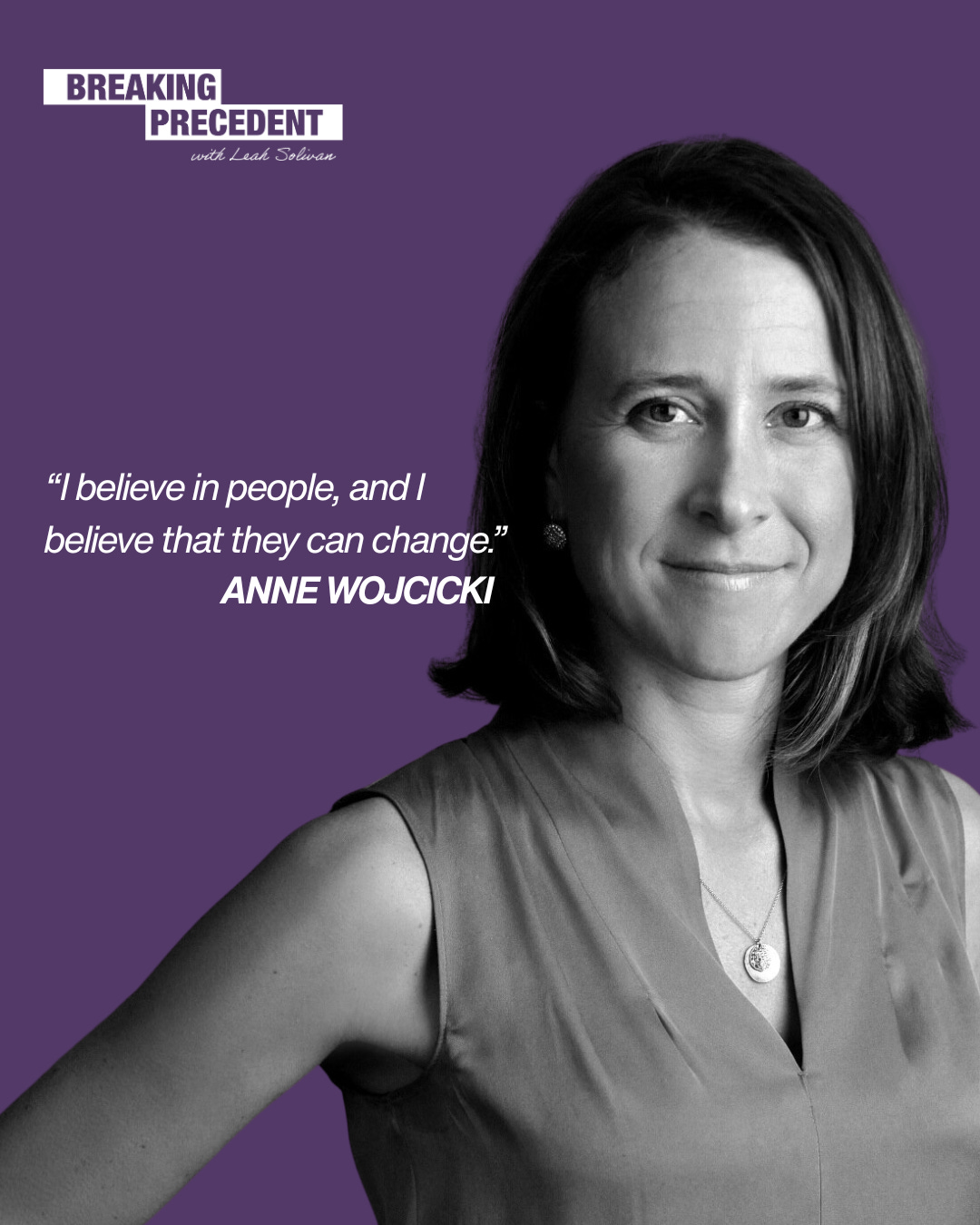
Anne Wojcicki has spent much of her career pushing directly against that instinct.
When she founded 23andMe, the idea that people should have direct access to their own genetic information wasn’t obvious to everyone. In fact, Anne remembers people not even understanding why they would want their genetic information in the first place.
Her reaction was basically: Why wouldn’t you want to know? It’s a deceptively radical question.
Because information changes the timeline.
If you know you’re at higher risk for something, you may have the opportunity to screen earlier. To change a behavior. To ask a better question. To find the right doctor. To pay attention to something you otherwise might have missed.
The goal isn’t to predict everything. The goal is to create time. And time is one of the most powerful forms of agency we have.
Anne talks about this very directly when she describes what she sees as one of the biggest failures in our healthcare system: prevention is fundamentally misaligned with the incentives of a system built around treating illness.
As she put it, no one makes money when you prevent disease.
Think about how bizarre that is. Think about the incentives that are driving this system.
We spend enormous amounts of money trying to become better at treating people once something has gone wrong.
But preventing something from going wrong is harder to monetize.
So a system has been built that is often optimized for certainty rather than possibility. Wait until we know, wait until there’s a symptom, wait until there’s a diagnosis, wait until the problem is undeniable.
Wait.
But by then, we’ve already lost the one thing we can never get back:
Time.
Anne’s argument isn’t that genetics can tell us exactly what will happen. It can’t. Her argument is that knowing more about ourselves earlier can give us a better chance to do something with that information.
That’s a very different philosophy of healthcare. But it also reveals a very different philosophy of people. Anne doesn’t just believe that people should have the information.
She believes they can actually do something with it.
She told me that one of the biggest things 23andMe continues to disagree with the traditional healthcare system about is something surprisingly simple: She believes in people.
Give people the right tools. Give them the information. Believe they can change. That sounds almost naïve until you realize how radical it is.
We routinely make decisions about people based on who they are today. Anne’s philosophy asks us to think about who they could become tomorrow, which may be the deeper precedent here.
Not genetics, not technology, not even prevention.
Agency.
What happens when we stop treating people as passive recipients of healthcare and start treating them as participants in it?
We keep asking whether the information is certain enough, and maybe that’s the wrong question.
Maybe the better question is whether it’s early enough to matter.
Because certainty tells you what happened.
Information, when you get it early enough, can tell you what might happen.
And possibility is where agency lives.
That’s the bet has been making for nearly two decades: that people deserve access to information about themselves, and that if you give people the tools, the information, and the chance to act, they are capable of changing the story.
Maybe we don’t have to wait for something to go wrong before we’re willing to do something differently.
Maybe knowing sooner is itself a form of breaking precedent.
This week pairs with our latest episode of Breaking Precedent, where I sit down with Anne to unpack the story behind 23andMe: from growing up with a mother who taught her to question everything, to Wall Street, HIV activists, the founding of 23andMe, and her vision for a healthcare system built around prevention rather than waiting for people to get sick.
Thank you to our Precedent Breaking Partners Justworks, Taskrabbit, and SquaredAway for supporting this season’s conversations!


