
The Waiting Room Is a Policy Choice
It is 2020, and a man cannot breathe.
He is in an emergency department on the South Side of Chicago, and the room around him is bulging. The hospital has run out of room for the sick, so it has stopped pretending it has rooms at all. There are patients in the hallways. Patients in spaces that were never built to hold patients. The plan is to move him to the ICU. The ICU is full.
So he waits.
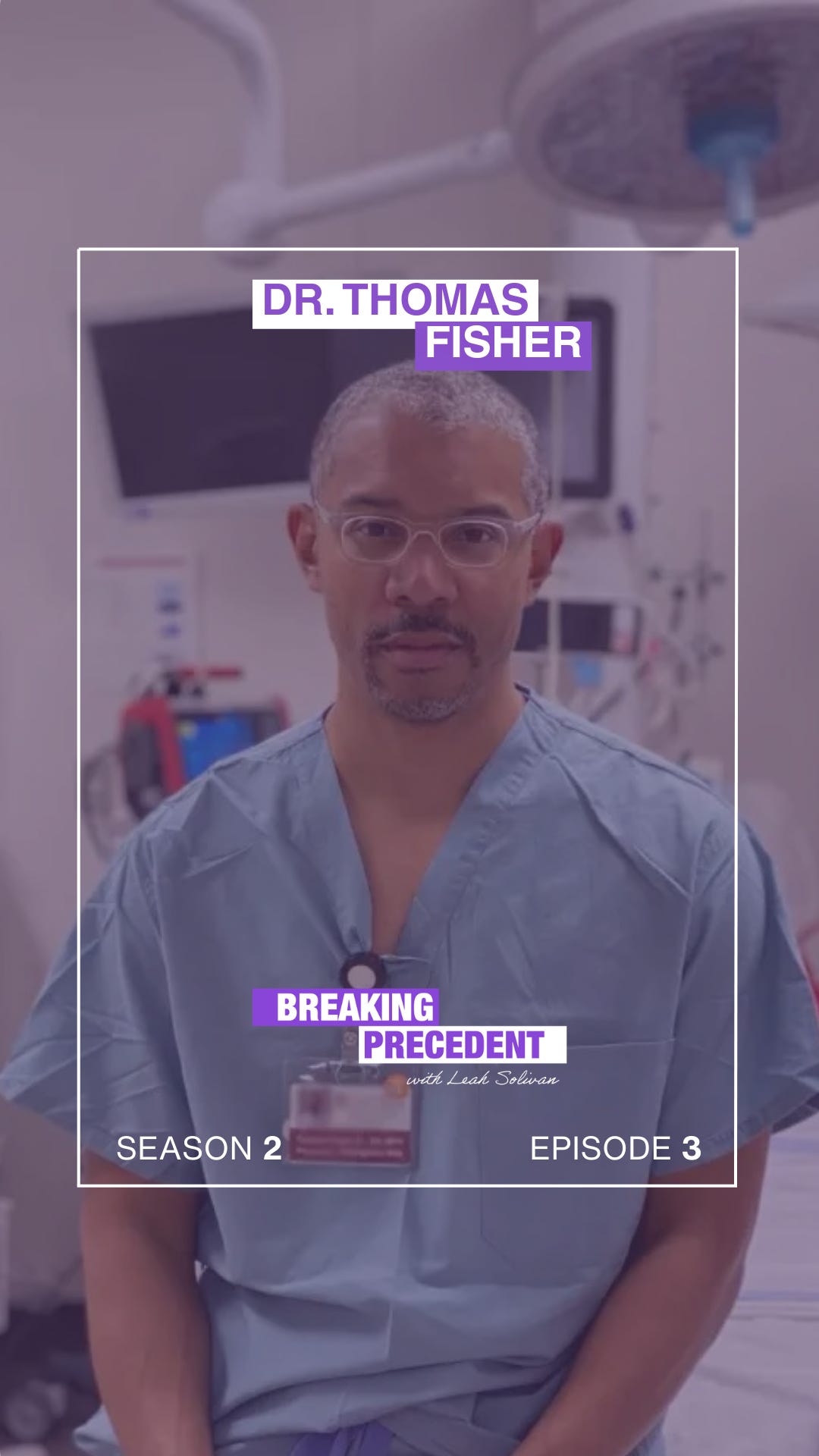
He is talking when Dr. Thomas Fisher first sees him. Six hours later, he codes. They do everything — the compressions, the medications, the whole sweaty, desperate choreography of people refusing to let a stranger die — and they cannot save him.
Here is the line from that story I cannot stop turning over. It wasn’t only that they couldn’t save him. The system was keeping him from being safe. Why wasn’t he already in the ICU? Why was the ICU full? Why was the emergency department full? You can answer every one of those questions, and not one of the answers is “biology.” They are all answers about how we decided to build the room.
That is the thing about an emergency room that took me a long time to understand, and that Dr. Fisher lives and breathes in his bones every day. After twenty years at the bedside, the ER is the last place in American life where everyone still shows up.
We used to share more rooms than we do now. Public transit was a common denominator until the people who could opt out did. Air travel, for a while. Now the wealthy don’t ride the bus, and plenty of people never fly. But everyone gets sick. Everyone slips on the ice. Everyone may eventually get in a car accident. The ER is the one room left where you sit next to someone whose life looks nothing like yours, because the body is the great equalizer, and the door, by law, cannot turn you away.
That law has a name. EMTALA: the Emergency Medical Treatment and Active Labor Act, signed in 1986. It says an ER has to treat you whether or not you can pay. And it sounds like exactly the right thing, because it is the right thing. Before it, hospitals would check your insurance status and dump the uninsured, including women in active labor, onto someone else.
But Dr. Fisher said something about that law that has stayed with me. It is an unfunded mandate. We decided everyone deserves care. We did not decide to pay for everyone’s care. So we wrote half a sentence into law and called it a value. And the unwritten half, who absorbs the cost, who waits, who gets the back door, and who gets the hallway, got decided too. Just not out loud.
I have spent my whole career around a particular kind of optimism. The founder’s optimism. The belief that a broken thing is mostly a misunderstanding, and if you get in there with a good idea and enough energy, you can fix it in about five to ten years.
Dr. Fisher had that optimism once. He told me he was naive, that was the word he used. He thought the problems in American healthcare were a big misunderstanding waiting for the right fix. And then he spent fifteen years learning that he was on the wrong side of the issue about as often as he was on the right one, not because he stopped caring, but because once you put the badge on, you are part of the system. Even when you give a damn. Especially then.
What he learned is the hardest, most useful sentence in his book, and I’d underline it twice if this were paper: the system is working as designed.
That is not cynicism. It is the opposite of cynicism. Cynicism says nothing can change. “Working as designed,” says something much scarier and much more hopeful at the same time: this was designed. The waiting room is not weather. It is not gravity. It is not a natural law that some people get an ICU bed and some people get a hallway. Somebody drew that line. Which means somebody, enough somebodies, can draw it again.
This is the whole reason I make this podcast, and I’m writing this book. There is a question I keep asking, of law and medicine and venture capital and the rules we hand our kids before they’re old enough to question them:
Does it really have to be this way?
The honest, uncomfortable answer, most of the time, is no.
Dr. Fisher could have stayed at the bedside. Caring for a sick person, one at a time, is real and it matters, and he says so. But you cannot suture a policy. There’s no medicine that keeps people out of the kinds of jobs that don’t come with insurance, no antibiotic for the budget bill that strips coverage from millions. So he ran for Congress, in the same community he has served for two decades, not because he thinks he’s the savior, but because, in his words, he’s “one who can stand up.”
He didn’t win the seat. And here is the part I keep coming back to: he told me, before the race was ever decided, that you don’t get to choose the outcome. You only get to choose how you show up. The problem was never a single opponent — it was poverty, segregation, illness, misinformation. Measured against that, standing up to be counted was the win. The line he drew didn’t move all at once. But he made it visible, said it out loud, and asked other people to pick up the pen.
He grew up watching the lesson land twice. Same kid, same field trip to the museum, treated as a curious mind in the private school and as a discipline problem in the public one. I’m the same kid, he kept thinking. That’s where precedent starts. Not in a statute, but in the invisible lines we draw around five-year-olds and never explain.
His grandfather couldn’t finish school in rural Kansas. Not for lack of genius, but because there was no return on the investment for a Black man in that place and time. When the Civil Rights Act opened the door, that whole generation walked through it. Dr. Fisher talks about how many generations of genius we simply throw away because we never offered them the room. That is the cost of a line nobody redraws.
So here is what I’d leave you with, whether you run an ER or a startup or a household.
When something is broken, and everyone shrugs and says that’s just how it works, get suspicious. “That’s just how it works” is almost never physics. It’s usually a precedent to wear the costume of natural law. A decision so old it stopped looking like a decision.
The waiting room is a policy choice. So is who gets seen, who gets believed, and who gets the back door. None of it had to be this way. Which is the most daunting thing you can learn, and also the most freeing, because anything that was decided can be decided again.
You just have to be willing to be one of the ones who stand up and ask the question out loud.
Does it really have to be this way?
Dr. Thomas Fisher’s episode of Breaking Precedent is back on the feed this week, alongside our Healthcare compilation featureing Halle Tecco and Lynn Jurich. If this resonated, go listen — and then go find the line in your own world that everyone treats as gravity.


