
Summer Break: Broken By Design - The People Inside Healthcare's Hardest Problem
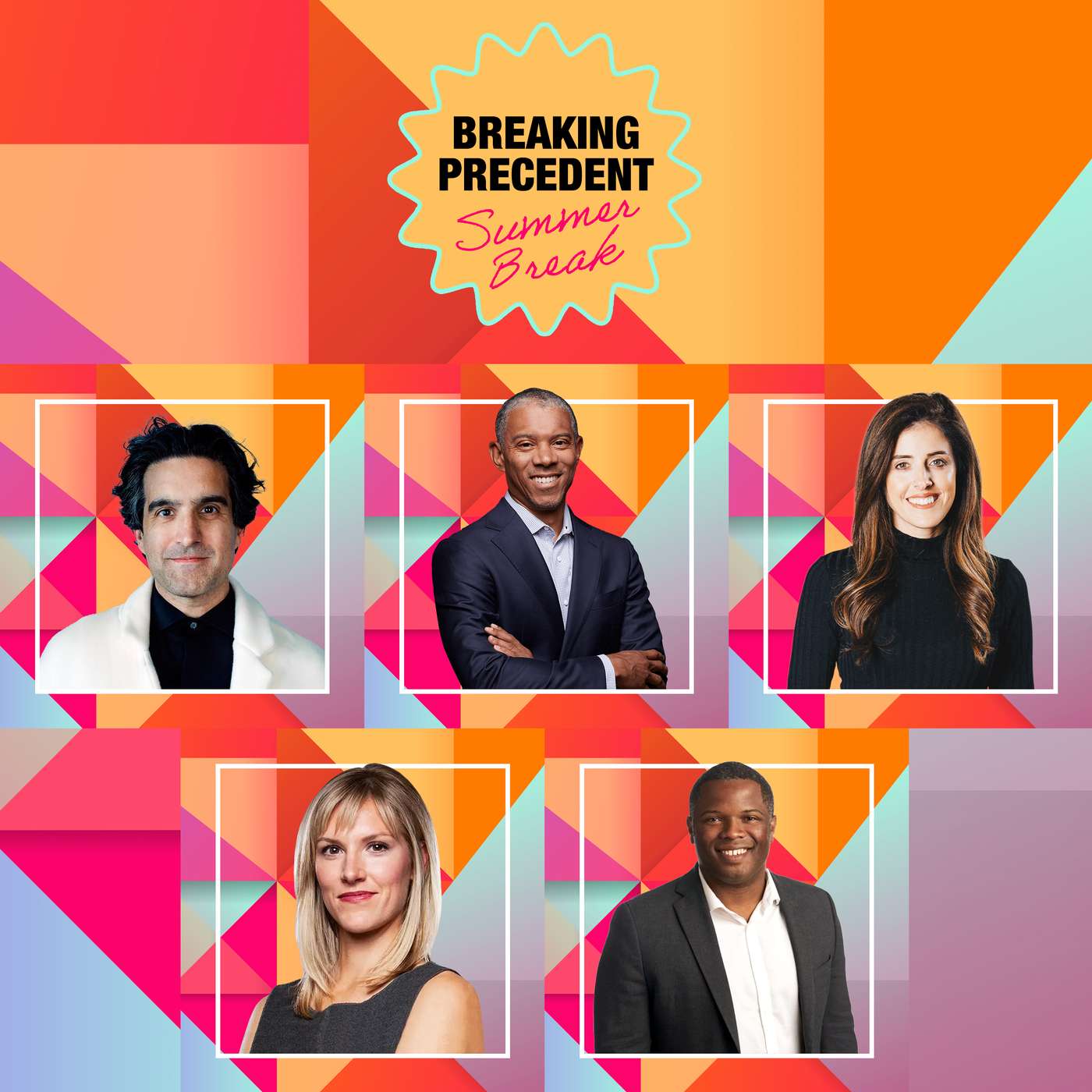


During our summer break, we're revisiting a compilation of previously released episodes about a healthcare system that is at once the most advanced in the world and one of the most broken. Hear Halle Tecco on why healthcare can't absorb its own innovation, Dr. Thomas Fisher on a system that's working exactly as designed, Lynn Jurich on the research gap that overlooked women's bodies, Kevin Caldwell of Ossium Health on prevention at the cellular level, and Andy Dunn on why mental health is health. Together, these stories trace why the system stays broken and introduce the people working to change it.
- Broken System: Halle Tecco on What it Takes to Build Massively Better Healthcare Listen here: Apple | Spotify
- Emergency Break: A Doctor's Case for Rebuilding the System, Not Just Treating the Symptoms Listen here: Apple | Spotify
- Shattering the Grid: Lynn Jurich on Electrifying Homes and Extending Women's Lives Listen here: Apple | Spotify
- Breaking Bad: Kevin Caldwell and Ossium Health is Banking on Bone Marrow for Curing Cancers and Transforming Longevity Listen here: Apple | Spotify
- The Breakdown: Andy Dunn on Building Bonobos, Battling Bipolar, and Baking Pie Listen here: Apple | Spotify
Halle Tecco Halle Tecco is a healthcare investor, operator, and educator who founded Rock Health, the first venture fund dedicated to digital health. An angel investor and longtime voice in health innovation, she frames healthcare around the "iron triangle," now four aims of better outcomes, greater access, lower cost, and a better experience, and argues the industry has "an implementation problem, not an innovation problem." In this episode she draws on case studies from her work, including PillPack and the cautionary tale of uBiome, to explain why the system so often rewards incumbents over better ideas. Connect with Halle Tecco on LinkedIn and at halletecco.com
Dr. Thomas Fisher Dr. Thomas Fisher is an emergency physician and the author of The Emergency: A Year of Healing and Heartbreak in a Chicago ER. Writing and practicing from inside an overwhelmed emergency department, he makes the case that the system is "working as designed," built to step in when things go wrong rather than to keep people well, and that its true moral purpose is to protect us when we are most vulnerable. In this episode he shares the story of a COVID-era patient he couldn't save, and how the same metrics that hide problems can be used to close equity gaps. Dr. Fisher is now a candidate for U.S. Congress in Illinois, carrying his case for rebuilding the system into public office. Connect with Dr. Thomas Fisher on LinkedIn and learn about his campaign at Thomas Fisher for Congress
Lynn Jurich Lynn Jurich is a serial entrepreneur best known as the co-founder and former CEO of Sunrun, which she led for 16 years and took public as the largest residential solar company in the U.S. After a health scare in her early forties, she turned her attention to female longevity, building a new standard of precision, prevention-first care for women. In this episode she confronts how little research exists on women's bodies, noting that before 2016, 80% of NIH studies were conducted only on men, and what it would take to change that. Connect with Lynn Jurich on LinkedIn
Kevin Caldwell Kevin Caldwell is the co-founder of Ossium Health, which is building the first large-scale bank of bone-marrow stem cells for cell therapies, and a Bridgewater Associates alum. Convinced that rising healthcare costs are better solved through biotechnology than through politics, he champions proactive, preventative medicine: banking your own stem cells while you're young and healthy, the way you might fund a 401(k). His guiding line, borrowed from Virgil's Aeneid: "the greatest wealth is health." Learn more about Ossium Health and connect with Kevin Caldwell on LinkedIn
Andy Dunn Andy Dunn is the co-founder and former CEO of Bonobos, the menswear brand acquired by Walmart, and the author of Burn Rate: Launching a Startup and Losing My Mind, a memoir about building a company while living with bipolar disorder. A leading voice on founder mental health, he speaks candidly about diagnosis, a second manic episode at the height of his success, recovery, and the conviction that mental health is not separate from physical health. Connect with Andy Dunn at andydunn.com and on Instagram
Resources: Rock Health PillPack Outlive (Peter Attia) Sunrun The Emergency (Thomas Fisher) Burn Rate (Andy Dunn) Bonobos NIH
Show Notes:
00:00 – The most advanced system in the world, and one of the most broken
00:25 – Welcome to Breaking Precedent
00:35 – Halle Tecco: growing up on Medicaid, the haves and have-nots
01:10 – Where you live predicts how long you live
02:13 – It's not effort: the incentives don't match
02:28 – "Death by pilot": an implementation problem, not innovation
03:40 – The system is rigged: incumbents, PillPack, and the DC lobby
04:33 – From the iron triangle to four aims: follow the evidence
05:23 – Founders carry the full stack
06:00 – Venture timelines vs. healthcare, and the uBiome cautionary tale
08:01 – Nobody knows what anything costs
08:25 – Built for emergencies: why inefficiency is a feature
08:56 – Dr. Thomas Fisher: "working as designed"
10:13 – The story that keeps him up at night
12:33 – Health is economic
13:03 – Misinformation, vaccines, and losing sight of the stakes
14:48 – Juking the stats, and using metrics to close the gap
17:02 – Lynn Jurich: from sick care to health span
17:43 – Neck surgery at 41 and the women's-health research gap
19:45 – Precision, prevention-first care for women
21:22 – Kevin Caldwell: prevention at the cellular l...
Healthcare Compilation Audio (NEW)
Speaker 9: [00:00:00] Healthcare is one of the most advanced systems in the world and one of the most broken.
We have the best doctors, the most sophisticated technology, more [00:00:10] data than we've ever had before, and yet outcomes still don't match the promise. So the question is, if it's so broken, [00:00:20] why is it still standing
Leah: Hi everyone. I'm Leah Sullivan, and this is Breaking Precedent, the podcast where we dive deep into the stories of innovators who are pushing [00:00:30] societal boundaries, challenging precedents, and setting new ones in their fields.?
Speaker 6: I would say probably in general, like my upbringing and some of [00:00:40] the healthcare experiences I witnessed growing up in Ohio with some family members that were low income and on Medicaid, and realizing very quickly [00:00:50] that we have a system of haves and have nots, you know, for wealthy, lucky individuals.
We have one of the best healthcare systems in the world, but [00:01:00] for the vast majority of Americans, we have a system that is expensive and hard to access. And the fact is where you live, your race, your job, your income, all predict your health [00:01:10] outcomes more reliably than any. Clinical biomarker or genetics.
There's actually some data that backs us up. Americans living in the top 1% live on average, seven years [00:01:20] longer than people living in the bottom 50%, and a person living in a small rural county with a median income of. 30,000 can expect to live a full [00:01:30] decade less than someone like you or I, an affluent suburb with a medium income of a hundred K.
Wow. and actually I do talk about this in my book and I speak about specific [00:01:40] family members and their experiences. Unfortunately, they're no longer with us, but I talk about how much of our modern healthcare system assumes just a level of engagement, time, literacy, wealth, [00:01:50] and support that really.
Isn't evenly distributed, and I won't go into it here. You'll have to read the book. Yeah. But that experience and specifically a specific uncle and his experience [00:02:00] in the healthcare system really made it impossible to ignore for me. And just, you know, learning that engagement in the healthcare system itself is a [00:02:10] privilege.
​
Speaker 9: What you're hearing is not a lack of effort. It's not a lack of intelligence, and it's definitely not a lack of care. The system exists, the data exists, the people [00:02:20] exist, but they're not aligned. Incentives don't match. And that's the difference between something that works and something that works well
Speaker 6: Yeah, I mean, I agree that healthcare [00:02:30] loves pilots. A decade ago, I wrote an article for KQED that was like death by pilot because I just saw so many healthcare startups do pilots that would go [00:02:40] nowhere and waste the time.
I've talked about that quite a bit. I wouldn't say healthcare hates scale. It's definitely challenging to scale, but it took scale for the incumbents to get as much power as they [00:02:50] have today, especially health plans. Pharmacy benefits managers, but certainly from like the provider side, it's very fragmented.
It's very regional, so there's scale in some [00:03:00] places that has been disadvantaged to patients and then not scale in other places where maybe we would have a better experience if there was some economies of [00:03:10] scale there. I think the problem is that we often confuse proof of concept with proof of impact, and then we never do like the hard work of operationalizing the scale.
And a lot of [00:03:20] people say. We have an implementation problem, not an innovation problem in healthcare that the problem isn't, that we don't have tools that are helpful, but that we don't [00:03:30] have a way to implement them and we don't have teams to implement them broadly. So, and that kind of goes back to what we were saying earlier with like the cultural friction that you see in a lot of these [00:03:40] like old school healthcare systems.
We like to believe that if the goal is noble, that you will be successful.
But the system, the healthcare system is rigged and the incumbents don't [00:03:50] all want to play Nice. And I think that can be uncomfortable because people wanna believe that we're operating in a rational system and a fair system, and that every startup has a chance, but we're not. And the incumbents I [00:04:00] see them play mean all the time.
And I actually have a case study in my book about PillPack, where one of the incumbents try to take them down and how they fought that off incredibly well, [00:04:10] but. More often than not, the incumbents win because they can outspend, they can bend policy in their favor. It makes us uncomfortable because we really wanna think that [00:04:20] capitalism is fair, but it's not.
Speaker 7: Yeah, it is disappointing.
Speaker 6: Yeah, that's true. It's not a meritocracy.
Speaker 7: Yeah, it's
Speaker 6: not a meritocracy. Yeah, it's
Speaker 7: not.
Speaker 6: And and these [00:04:30] incumbents, their healthcare lobbyists are the biggest in dc so they're not spending their money outta charity. They're doing it 'cause it benefits their business. I actually love tech. That looks impressive because healthcare deserves [00:04:40] better. But obviously it only matters if it's moving the needle in healthcare, either or we call it started off as the iron triangle.
But now there are four things, but improving outcomes, [00:04:50] increasing access, lowering costs, or improving the healthcare experience. And the only thing that you can do is look at the evidence. The challenge at the early stage is that the evidence is necessarily [00:05:00] thin. So what I look for isn't. Perfect data. I look for directional proof, general data of studies of similar interventions, early signals, [00:05:10] consistent with like real world use, not just like ideal conditions.
And then obviously kind of the people involved. So much of it is the people involved and you know this is true for most industries. [00:05:20] Are they precise about what they know, what they don't know, and then bringing in kind of the right team and partners to the table.
Speaker 7: I mean, that is so interesting because [00:05:30] it's like, yeah, wow.
These founders, they really have to take on a lot and understand a lot and understand the full stack and be willing to kind of. Go to bat outside of their key area. I [00:05:40] love the comment though, that healthcare deserves better. We deserve these impressive designs. Right? Totally. And really flashy, fancy.
Absolutely, yes. It's interesting though too with venture, right? In venture [00:05:50] investing there is this like timeline, right for venture, and if you need the proof and you need the outcomes, and you need the research, that can take more time. Is [00:06:00] that at odds with venture at all, or how do you reconcile that?
Speaker 6: A hundred percent.
Biotech investing has kind of always been like that, right? Where it takes a lot of time to get through clinical [00:06:10] trials. So there are some parts of venture and biotech has always been venture backed. So there are some places within venture investing that understand these [00:06:20] long, risky timelines. But as you know, like with tech investors, they don't necessarily have that same level of patience because what they're comparing their investments to are these, [00:06:30] you know, very.
Rapidly growing, easy to pivot products that can grow very quickly without data you don't need, like the [00:06:40] data is how many users are logging in, how many people are paying for it. Like, you know, the sort of KPIs are quite simple. Whereas in healthcare, the KPIs are going to be a lot [00:06:50] longer to generate because sometimes healthcare outcomes take more than a day to to see or,
Speaker 7: yeah,
Speaker 6: you know.
Savings is, is in the long run. So it's definitely, it's [00:07:00] difficult. But then, you know, I do think that there are a lot of tech investors who genuinely want to do healthcare because, and balance their portfolio with healthcare investments because they recognize the [00:07:10] TAM is really high. They recognize the impact is potentially huge.
And so there's like a mission orientation to investing in healthcare. Just, [00:07:20] you know, having to. Manage expectations of growth, and it's really important not to push the founders in a way that causes them to cut corners. And we've seen [00:07:30] this, right? Like I talk about the uBiome case in my book on how that happened, like an otherwise very impressive team that.
Ended up cutting a lot of corners, getting in big [00:07:40] trouble with the FBI and are now fugitives on the run. And a lot of that comes down to kind of the pressure from investors to grow at all costs. So we have some [00:07:50] cautionary tales and hopefully that has spooked folks enough that the investors recognize that we can't take that same grow at all cost [00:08:00] mentality to healthcare.
Speaker 7: None of us know how much a procedure's gonna cost, how much an X-ray's gonna cost when you go to the er. Like no one knows what anything [00:08:10] costs. And it's not like we can compare costs either and say like, oh, I'm gonna go to this place because I think it's gonna be cheaper or whatever.
You know? It's just like there's no transparency. Yeah,
Speaker 6: there's [00:08:20] no
transparency and. Know if you pick up a prescription and the person behind you is picking up the same prescription, like it can be a hundred x price difference
Speaker 9: Because once [00:08:30] you understand how the system was built, you start to understand why it behaves the way it does. Healthcare wasn't designed to be seamless. It wasn't designed to be [00:08:40] integrated into your daily life.
It was designed for something very specific, to step in when things go wrong. And when a system is built for [00:08:50] emergencies, efficiency is not the priority, which means inefficiency isn't a bug, it's a feature.
Speaker 5: I love when you said in the book, [00:09:00] the system is working as designed.
Speaker 6: Yep.
Speaker 5: It's really hard to break the design of a generations, centuries old [00:09:10] system. Right?
Speaker 6: Yep. I also wanted my colleagues to see themselves and to see these issues. If I wrote this book and my colleagues were like, that ain't really how it is, I failed. [00:09:20]
Speaker 7: Right? They
Speaker 6: needed to say, yep, this is exactly how it is.
And I needed my patients to see themselves. I de-identified, but I wanted my patients to be like, [00:09:30] okay, I see why this is happening.
Speaker 7: Mm-hmm.
Speaker 6: They're trying, we are all trapped together. Yeah. And when it comes right [00:09:40] down to it, the we is literally everybody. 'cause if you're not a patient, you will be.
Speaker 8: Yeah.
Speaker 6: And just because you're well off, you might have a couple of back doors you can use, but if the [00:09:50] system is designed to harm, you're likely to get harmed.
Speaker 8: Yeah.
Speaker 6: And we need to do better. And so that's why I want it to really explicate like [00:10:00] what is happening and why? What are the stakes? Mm-hmm. And how do we, the collective we like, there's no distinction. We are all in this. How do we
make a [00:10:10] decision to get ourselves out of it?
Speaker 5: What's a story from the book that still keeps you up at night?
Speaker 6: In one of the later chapters, I talk about being [00:10:20] on shift and a guy comes in who can't breathe. Now in 2020, most of the people who can't breathe were COVID patients. Like I saw a lot of [00:10:30] death and suffering that year.
Speaker 8: Yeah,
Speaker 6: this patient was diagnosed. We had planned to send him to the intensive care unit, [00:10:40] and so, you know, the waiting room is bulging.
You know, at that time we expanded our space to cover. All kinds of areas where people didn't [00:10:50] usually take care of patients. Like the ambulance, parking lot, baby clothes, parking. The parking lots. We had people everywhere so that we could do the best we can to serve as many people as we could. And so, yeah, once somebody was like, [00:11:00] okay, they're gonna go to the ICU, we like start going elsewhere.
Speaker 8: Yeah.
Speaker 6: But he started to decline before he got to the ICU. So I go and see him and he's now having more trouble [00:11:10] breathing, and his vital signs start to get a little unstable. I call the unit and we start readdressing. Okay, let's get some more resuscitation in here. Maybe you need some fluid, maybe we've missed a diagnosis. [00:11:20] He continues to decline. The ICU comes down working their butts off too. They're busy spilling over into other units, and then he codes and he [00:11:30] dies in front of us and we do everything like we do chest compressions and give medications, and we work on him until all of us are sweaty and [00:11:40] tired and we can't save them.
Yeah. First of all, when somebody is talking to you and then six hours later they're gone.
Speaker 7: Mm-hmm.
Speaker 6: You carry that. [00:11:50] Right? It's not abstract. This is a person. Yeah. You had conversations, you looked in the eye, you held hands. Mm-hmm. You talked and now he's gone. Mm-hmm. [00:12:00] And despite everything you did, you couldn't save him.
And it wasn't just that you couldn't save him, the system was keeping him from being safe. Like why wasn't he in the ICU already? [00:12:10] Why is the ICU full,
Speaker 8: right? Yeah.
Speaker 6: Why is the emergency department full?
Speaker 8: Yeah.
Speaker 6: And. There is this really familiar but [00:12:20] helpless feeling of being trapped right alongside your patients.
Unable to get them what they need, and what they need [00:12:30] is salvation.
Speaker 7: Mm-hmm. Right?
Speaker 6: I am very interested in centering healthcare, making sure that we create a vision for [00:12:40] healthcare that extends beyond just simply undoing many of these cuts, but building the kind of healthcare of the future.
Creating an economy that understands what's at stake, that recognizes that [00:12:50] the inputs to our health are all economic inputs, housing, food. Things like inflation and the cost of utilities are all [00:13:00] central to allowing for us to thrive, and you can measure that in the length and quality of our lives.
I think it's worse. Yeah. Right. Yeah. I think that the misinformation [00:13:10] that became pervasive in society, yeah. At the advent of the vaccines means we're behind. Our public health system has been [00:13:20] unwound. Vaccines are now questioned. Even though the science is settled. We had leadership. That emerged then now in power telling us that Tylenol is not [00:13:30] safe for pregnant women and there's no evidence to support that.
The American College of Obstetricians and Gynecologists are like, where is this coming from? We should be talking [00:13:40] science and not right. This other stuff. We also lost perspective on the stakes. Okay. I just mentioned 1.2 million people died. Mm-hmm. From [00:13:50] COVID in two years. HIV aids has been with us since 1981.
Do you have any idea how many people have died of that? Americans? I'm just talking Americans, not globally. [00:14:00] Globally, the toll for both COVID and HIV aids is higher. How many Americans have died of hiv aids? 700,000 and some change. But think about all the changes we've [00:14:10] made as a result of that. You know the lessons of condom use?
Yeah. The antiretroviral medications, the risk mitigation properties. Fewer people [00:14:20] died than in two years of COVID and already like not look at that. Let's stop testing. Let's get rid of these vaccines. The vaccines ought to be one of the best stories ever told. In [00:14:30] less than a year, we created a vaccine against a virus we've never seen.
Right. We figured out how to get it into every community in the entire country in less than a year following a [00:14:40] cold chain. We saved millions of lives and now we're like, eh, that was fake. No, that was a triumph of American ingenuity.
Speaker 8: Yeah,
Speaker 5: What are [00:14:50] some other pieces that you see that make the system so broken for so many?
Speaker 6: I mean, you can juke the stats, right? We see that across society. Yeah. We see [00:15:00] that in quarterly corporate reporting where they're like, totally.
We'll figure out how to make that number right. We see it in policing. That is overs stat heavy. The example you [00:15:10] gave is incredible, terrifying and wrong. And I think a lot of it stems from the question of what is the point, right?
Speaker 7: Mm-hmm.
Speaker 6: Why are we here? And I think [00:15:20] that having the kind of leadership that helps us remain centered on that helps because I've seen those same statistics being used to improve care, right?
In the [00:15:30] emergency department, we measure a lot of things and have to report a lot of them wait times. For example, the number of people who leave before they're seen, the time it takes for somebody [00:15:40] with a heart attack to have their artery opened. The pace that we use, clot busting drugs for people with stroke, like these are things that they're [00:15:50] not perfect, right?
Speaker 8: Yeah.
Speaker 6: Science will continue to evolve. We'll make them better, but they're used to sort of say, here's our landmark for what we think quality is. [00:16:00] The challenge then is how do you use that? Right? Because once you take it to that next level where it's, okay, well are we able to do this with everybody? [00:16:10] Right?
Who are the populations that aren't achieving those goals? Can we mm-hmm. Improve it with them? Is it the older people, the younger people who aren't getting it? The black [00:16:20] people, the white people?
Speaker 7: Mm-hmm.
Speaker 6: What about people who aren't insured? Once you start really saying, if this is our bar, how do we get everybody there?
As opposed [00:16:30] to figuring out, well, how do we just maximize our profit around these things? Or how do we juke the stats? These are managerial questions also. Mm-hmm. Mm-hmm. Like you reorganize an entire [00:16:40] system that's been doing things one way to do something else. That's not easy, but that's what's required.
Yeah. And so I think the metrics can be [00:16:50] used effectively if we have this clarity about the moral purpose of our healthcare system is. Protect each other [00:17:00] when we're vulnerable.
Speaker 5: And if Hallie and Thomas show us why the system is so hard to change, Lynn Jurich shows us where the next fight might be. Because healthcare is [00:17:10] not only broken when people cannot get treated. It's also broken when whole bodies, whole categories of patients, and whole stages of life have [00:17:20] not been studied deeply enough in the first place.
Speaker 6: Lynn's story takes the question from sick care to health span, and asks, "What would it l- be like to [00:17:30] build a system around prevention, evidence, and women's bodies before crisis is the only option?" Because that may be the real test of whether healthcare [00:17:40] can change. Not whether it can respond when something breaks, but whether it can learn to care before the breaking point
​
Lynnn: know, I ran Sunrun [00:17:50] for 16 years
when I left my CEO job and, after that I was a little bit of a mess physically and I ended up having to have a neck surgery.
and they [00:18:00] wanted to fuse three levels of my neck at age 41. and so that put me on this whole, health journey, which led led me to my next, sort of career move. but yeah. at that time I [00:18:10] read Outlive Longevity, started having this moment, you know, we're really shifting the model in healthcare from, sick care to preventative care.
And so as I started to [00:18:20] learn more about that and more about my own health journey, I was appalled by how little research there is on women's health, and I had no idea [00:18:30] the effects of perimenopause, what happens when you actually lose your ovaries. And,the little amount of knowledge that was out there.
and so I [00:18:40] tracked down who I thought were the smartest doctors that I wanted personally, and I just called them up and said, I think we really need to build the standard of care for female longevity. [00:18:50] We have fundamentally different bodies than men. We're gonna half our lives without this organ system.
That is critical. And I had no idea. I think maybe your listeners would be shocked too. [00:19:00] Women have 75% dementia. We have.
15 times more osteoporosis than men. We have 80% of autoimmune diseases it [00:19:10] was before 2016, 80% of all NIH studies were only done on men. This is not very long ago , the reason is our bodies [00:19:20] complex. we work on a monthly cycle. Men work on a 24 cycle.
but that's what we even when they were testing breast implants, it was on male rats male brain [00:19:30] post menopause, the male brain makes six times the amount of estrogen. Is there receptors everywhere?
In your bones, in your heart, in your brain? it is key. Women are told it [00:19:40] causes estrogen, causes breast cancer. That's false. That's the biggest lie I ever told to women in medicine period. once you go through menopause,
Leah: So you talk about moving healthcare [00:19:50] from sick care to health span, right? So what that shift look like the everyday woman?
Lynnn: so one.
science is good enough now with the testing [00:20:00] that's out there,to get really precision medicine. And so one of the other
for the patients in my practice are we will give you very precision what [00:20:10] works for you based on your biology, based on your blood work, based on real evidence in your own body, and teach you what nutrition habits might work, what supplements might work, [00:20:20] what fitness routine might work for you.
How do you actually tackle your sleep and stress management. And so, you know, what we're really building and really pioneering is this very precise [00:20:30] precision care for women that
also really tackles women's issues around again. 80% of Women have gut issues.it's like that, it's the hormones.
It's just unpack it, get [00:20:40] women answers so they feel good perimenopause, which is, precedes menopause, is on average seven years.
It's a really long time. And I believe this, you know, so if [00:20:50] menopause is 51 on average, so you're starting in 43, it's younger than you think, and these are prime. periods of a woman's life where women should be out there in [00:21:00] leadership positions, you know, feeling powerful at work, running the military, running the government.
And instead, what I had witnessed is some people losing self-confidence, not sleeping well, and having sort of [00:21:10] brain challenges. And these are all real and, they don't have to be. And so really confident people who actually can map what's going on with your hormones start to, [00:21:20] explain to women how you might be able to supplement that way before menopause..
Speaker 6: Yes. And once you see healthcare as a system, you start to see that the problem is not only what happens inside hospitals, [00:21:30] it is also what we choose to build before people ever become patients. That is where Kevin Caldwell's story takes us. Kevin is thinking about healthcare [00:21:40] at the level of biology itself, but the same questions keep coming back.
Who gets access? Who gets protected early? And what happens [00:21:50] when innovation exists, but the system still cannot deliver it to everyone who needs it?
Kevin: So when I was thinking about what to do [00:22:00] next after Bridgewater at this point, it was, gosh, I guess it was 20, 20, 13, 2014. Yeah. And at the time. I would say that the biggest [00:22:10] national issue that we were grappling with in U. S. politics really for a decade was this question of politics. How we were going to pay for our rising healthcare costs.
It was just a couple of [00:22:20] years after the Affordable Care Act had been passed and the population then and now was aging. And it was a topic that I really got into. And I think that human beings [00:22:30] are better at science than we are politics. And I thought that if we were going to solve this problem of how do we continue to improve [00:22:40] human life expectancy and our health span, right, which we've done, we've made tremendous headway in over the last century in a way that's still economically sustainable, [00:22:50] that if we're going to solve that problem, it would have to come from fundamental sort of innovation.
in our, in biotechnology, right, in the underlying [00:23:00] technology of healthcare, rather than in a sort of political solution. And so that problem, right, how we continue to improve our health in a way that's [00:23:10] sustainable is one that really intrigued me. And in part, because one thing about growing up with your grandparents is that by the time I was in high school, they were already very far up in [00:23:20] age.
And so I saw their health deteriorate, and I saw how. Our healthcare system was very reactive, like first they would get sick, and then we would take them [00:23:30] to see a doctor who would retroactively diagnose them and prescribe an intervention that usually did reduce their suffering, but didn't really improve their health, at [00:23:40] least didn't bring them back to the level of vigor that I remembered them being at just a few months before.
And so, when I was thinking about what I could do that would be meaningful. So, yeah, like setting [00:23:50] our healthcare system on a better, more proactive, more preventative curative trajectory seemed right. There was just one small issue with that, which is that I hadn't done anything in healthcare or [00:24:00] biotech.
I've done like everything else, but not that
Leah: arguably, the best donor for your older self is, of course, your younger self. And so, if someone banked their own [00:24:10] stem cells when they were our age, for potential use when they were in their 60s, 70s, or 80s, that could be incredibly powerful.
Kevin: [00:24:20] And the cells can be aspirated and sort of frozen relatively inexpensively. In fact, that process of taking cells from a living person and freezing [00:24:30] them is far simpler and easier than what we do every day from deceased daughters. So it's something that is easily within our capabilities. The interesting thing about this is that it's [00:24:40] a classic example of sort of preventative, proactive medicine where at a time when you're intentionally perfectly healthy, You are making an [00:24:50] investment in your future health.
And one thing that we've noticed about the way that we think about our future sort of culturally now is People are very accustomed to this [00:25:00] idea of investing in their retirement to their 401k account and putting away funds in their twenties or thirties that they want to use for decades because they understand that that [00:25:10] compounds and it grows over time and their future self, again, will appreciate it.
But our slogan at ASEM is sort of borrowed from Virgil's Aeneid from the ancient Latin, the [00:25:20] greatest wealth is health. And so if we're willing to set aside some consumption as young adults. to ease retirement later, then [00:25:30] why wouldn't we like take a trip to a doctor's office to like have a stem cell aspiration now in order to potentially, you know, arm our future selves [00:25:40] against disease.
Kevin is talking about the body at a cellular level, but the same truth applies to the mind. We cannot keep treating mental health like it sits [00:25:50] outside healthcare or outside leadership or outside ambition.
Speaker 6: Andy Dunn's story makes that impossible to ignore. He built one of the defining [00:26:00] consumer companies of his generation, but underneath that success was a mental health journey that had to be named before it could be healed. So maybe the real [00:26:10] shift is not just from sick care to healthcare, it is from reaction to responsibility.
Andy: Responsibility for the systems we inherit, the incentives we [00:26:20] tolerate, the bodies we under-research, the minds we overlook, and the people who are still waiting for care to reach them before the crisis [00:26:30] begins. I had started Bonobos and that was the beginning of having depressive episodes.
Leah: Okay.
Andy: So I had in a weird way, an unfortunate thing happened, which is that when I was diagnosed at [00:26:40] 20.
My discharging psychiatrist said if Andy has no recurrence of mania or no onset of depression for the next five years, it's possible that this [00:26:50] diagnosis isn't right. There's a differential diagnosis quality.
Leah: Kind of gave you an out.
Andy: It gave me an out. I made it five years. I was like, all right, I made it. And then I [00:27:00] would remember that it happened. And I would have this like crazy rising anxiety and fear. then just push it back down. It [00:27:10] was too traumatic to think about.
And now I get it. I understand that sometimes there's something in our lives that feels like it's too [00:27:20] hard to bear and we are blocked from it and We've got to do some kind of work. to get that out of our body to be able to [00:27:30] look what happened to us in the eye, in a clear eyed way and somehow make peace with it so that we can deal with that. And obviously that's a very tall order.
Leah: It is a [00:27:40] tall order. And 16 years later, you had another episode.
It happened again, this time You were able to face it head on [00:27:50] afterwards and really take the steps to get better.
Andy: Yeah, I was very lucky. And also had grown up a [00:28:00] lot. And also the world had grown up on this topic. So the headlines here were, I had a second messianic episode. This time I didn't think I was Jesus.
[00:28:10] And of course I was just a guy on nine street in New York city losing his mind. And. What made that episode so difficult, [00:28:20] there were two things that made it difficult.
One was the stakes were so much higher.
For me at 36, I had raised a hundred million bucks.
I had 600 employees. I had a woman I was in love with who I was hoping to [00:28:30] marry. The stakes were much higher. so that was one thing that made it. hard. And then the second thing was that during the mania, I had a violent episode [00:28:40] where my now wife and mother in law tried to prevent me from running naked into the streets of Greenwich Village.
And when I was discharged from the psych ward after a [00:28:50] week, I thought, okay, now I'm ready to deal with this. Mm-hmm . And I'm ready to take medication and see a doctor and patch up these relationships and talk to my work colleagues about this and [00:29:00] figure it out. And I was discharged straight in handcuffs because during that violent episode, I had assaulted my now wife and mother-in-law.
And that just opened up a whole new ocean [00:29:10] of shame and pain. And after mania, you typically have a very long period of depression. So I was catatonically depressed for six months. I didn't want to [00:29:20] live. I was in and out of the legal system with the charges.
I didn't know if things would work out with Manuela. And I didn't know if I had to step down from my job.
so it was kind of a horrifying time. And [00:29:30] then everything went right. Got a great doctor who helped me figure out the right medicinal cocktail, the right meds to get out of it. Took a half a year, but got [00:29:40] through it. So the medication working and having a great mental health provider, that's 80 percent of the battle.
And then definitely most importantly for the arc of my life, Manuela stayed with me and her [00:29:50] mom forgave me. And that was the most redemptive part of this because they were the only people that didn't have to deal with me.
You know, your own family's got to take you on. You've got a [00:30:00] good family. Your family's your family. The work thing was magical, but also they kind of like, there was an existing thing. History there, but Manuel and her mom should [00:30:10] have maybe headed for the hills. That's what I thought would happen. And I remember sitting down
The first time you're meeting like the meet the parents like dinner. And [00:30:20] on some level, that's better than a family not having the conversation,
Whereas in my wife's family and a lot of the people around the [00:30:30] ecosystem that I've met, like you just call a spade a spade. so I think that's part of it. And then so confronting hard things and then also acceptance [00:30:40] that mental health is not different than physical health.
Or my wife will now say like she feels like she was what my doctor calls dysthymia, like mild depression.
She's basically had mild depression for 20 [00:30:50] years and that's her journey and figuring that out and what are the right meds. All that stuff is just like in the water in a way that not at all. I wrote a [00:31:00] fricking book about this and I literally just had to convince my uncle that it might be okay. for his daughter who was very unwell to take medication and he felt resistant to it [00:31:10] or I can't get anyone in my nuclear family to see a therapist for a year to save my life.
And it's like, guys, this is so messed up. I wrote a book about this. Yeah. Why am I the only [00:31:20] one in this family actively trying to address my mental health stuff? What about you guys? So that's how. strong. These forces are,
Leah:
Speaker 9: Here's the uncomfortable [00:31:30] truth: healthcare doesn't stay broken because no one sees the problem.
It stays broken because too many people are making it work anyway. Doctors compensate, [00:31:40] operators patch, founders build around it. Every day, people step in and fill the gaps the system leaves behind, and that's what keeps it alive. Just [00:31:50] enough care, just enough access, just enough functionality to prevent it from collapsing completely.
Leah: And that's what makes it so hard to break because the [00:32:00] system isn't failing loudly. It's failing quietly while still delivering just enough value to survive Precedent doesn't survive because it's [00:32:10] right. It survives because it still functions Thank you for listening to Breaking Precedent. Remember to click the follow button on your favorite [00:32:20] podcast app so you never miss one of these exciting conversations that challenges the status quo and inspires change.
And if you know someone who is trailblazing a unique path. [00:32:30] I want to hear their story. You can send a note to me on my website, breaking precedent. com. Until next time, I'm Leah [00:32:40] Sullivan.