
Who is Being Ignored in Your Industry?
Women, we’re very good at making the best out of a situation.
Learning the dress code.
Finding something that almost fits.
Carrying the bag without pockets.
Working around the system instead of asking why the system was built that way in the first place.
We adapt.
And then, sometimes, someone steps up and questions: Why are we doing it this way?
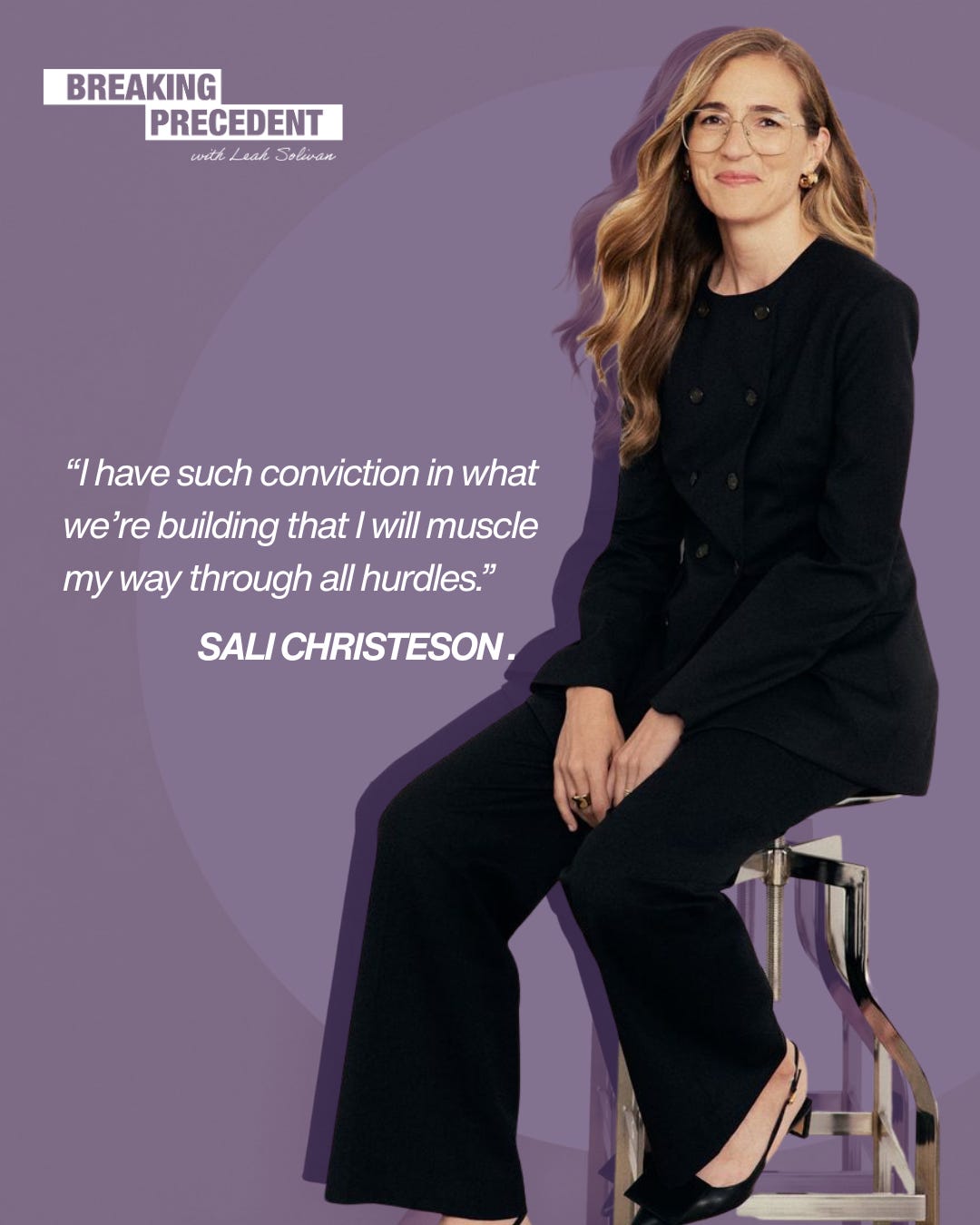
That was Sali Christeson.
When Sali started Argent, she wasn’t trying to reinvent women’s workwear for the sake of fashion. She was frustrated. She had worked in different industries, lived in different cities, navigated different dress codes. Yet, still kept encountering the same problem.
Women were an afterthought.
As Sali told me, work apparel is literally considered a “bridge category” in fashion school. It isn’t respected. And somehow, somewhere along the line, that attitude had translated into a pretty miserable reality for professional women.
In the industry, work and women didn’t seem to belong together.
Sali couldn’t understand why.
Neither could I.
I remember being at IBM and being really aware of what I wore to work. Conferences where the “uniform” came in men’s sizes only and was handed out to everyone felt like a reminder I didn’t belong.
You notice these things.
But noticing them isn’t the same as believing you can change them, or even deciding to.
Then Sali read a study showing just how much women are judged based on what they wear, and how much that can shape their careers. That was the moment she stopped just noticing and started taking action.
She didn’t have a background in fashion. She didn’t have manufacturing relationships. She didn’t have some perfectly mapped-out entrepreneurial plan.
She had a frustration that wouldn’t leave her alone.
And she believed the women experiencing the problem deserved something better.
That distinction matters.
Because one of the things I’ve come to believe about entrepreneurship is that some of the most interesting businesses start with a problem everyone else has accepted.
Sali witnessed this gap firsthand when she started fundraising.
Investors told her they’d seen “so many pitches” for women’s workwear.
Her response was basically: Exactly.
If there are almost no real options for women, and multiple founders are trying to solve the problem, maybe that’s not evidence the category is crowded.
Maybe it’s evidence that the problem is enormous.
That idea has stayed with me.
We tend to look at underserved markets and assume they’re small.
But sometimes “underserved” doesn’t mean small at all.
It just means nobody has figured it out yet.
And women are still profoundly underserved.
Not just in clothing.
In financial products, healthcare, childcare, consumer goods, workplace design, investing, technology. Almost everywhere you look, women have simply learned to work around things.
This isn’t just a cultural problem. It’s an economic one.
Because there is a massive difference between building something for women and actually understanding women’s lives.
Sali didn’t just want to make a better blazer.
She wanted to build a world around professional women, where the product, community, content, and mission reinforced each other.
And that was part of what struck me when I first met her.
Chris and I weren’t looking to invest in an apparel company. We were software investors. But when Sali walked into our office, the pitch felt different.
We weren’t just looking at clothing.
We were looking at a community. A point of view. A movement.
She identified a group of women already in the workforce, already ambitious, already spending, and recognized that nobody was really speaking to them the way she believed they deserved.
And in that gap lies the opportunity that has been ignored.
Not simply: How do I make a better product?
But: Why have we been conforming to this system for so long?
That question goes far beyond women’s workwear.
Who is being ignored in your industry?
Who is living with systems designed by people who don’t really understand their lives?
Who is being told that what they want is too small to matter?
Who is being asked to choose between function and beauty, ambition and family, profit and purpose, career and humanity?
And perhaps the most interesting question for founders: Who is complaining about the same thing over and over again?
Because that complaint might not be noise. It might be a market signal.
Sali’s story reminds me that the people most frustrated with a broken system aren’t the people who need to learn to live with it.
Sometimes they’re the people who should build the thing that replaces it.
Ten years into Argent, Sali has shown what happens when you stop asking women to adapt and start designing around their actual lives.
Which brings me back to the question I asked her at the end of our conversation: Who else is being ignored?
What other woman, in what other industry, is buying something designed by people who don’t understand her life?
Who else is waiting for someone to build the Argent of their world?
Because once you start looking for overlooked people, you start seeing them everywhere.
And maybe that’s where the next precedent is hiding.
This week pairs with our latest episode of Breaking Precedent, where I sit down with Sali Christeson to unpack the story behind Argent, from noticing how women were being overlooked by the fashion industry, to building a workwear brand around the realities of women’s lives, and what happens when you stop accepting a broken system and start designing something better.
Thank you to our Precedent Breaking Partners, Justworks, Taskrabbit, and SquaredAway, for supporting this season’s conversations!


