
Who Are You When the Title's Gone?
Nobody warns you about the day after.
They warn you about the climb. Everyone has advice for the climb: work harder, want it more, don’t quit. And they celebrate the summit, the medal, the exit, the headline. There’s a whole industry built around getting you to the top of the thing.
Then you get there. And eventually you leave it, because everyone leaves it. And the silence on the other side is a country no one gave you a map to.
I’ve watched founders, Olympians, and pro athletes live exactly this. Known, for years, by a single title. Introduced at every dinner with it. Asked to tell the same origin story, over and over, until the title becomes shorthand for who they are. I’ve done it myself. Over and over again.
And somewhere along the way, a precedent quietly takes hold.
We begin to believe that the title isn’t just something we did. It’s something we have to keep being. That the world expects consistency more than growth. That reinvention somehow diminishes what came before. We inherit the invisible rule that our next introduction should sound a lot like our last one.
Then, by choice or by time, the title is gone, and we’re left standing in the strange vertigo of a sentence that used to start with, I am the person who… and now trails off.
We call it a loss of identity. As if the identity were the title. As if, when the role goes, the self goes with it. That framing is a trap, because it means every ending feels like a small death, and it means you’ll cling to a role long past the point it’s serving you, purely because you’re afraid of who you’ll be without it.
But here’s the thing I’ve watched, up close, in the people who come through the other side of this well. The title was never the identity. The title was the most recent expression of something underneath it, something that doesn’t leave when the role does.
The athlete wasn’t the medal. The athlete was the discipline, the competitiveness, the ability to fail on a world stage and get up. Those don’t retire. The founder wasn’t the company. The founder was the pattern recognition, the appetite for risk, the knack for gathering people around an idea. That doesn’t get sold in the deal.
What actually happens on the day after is not that you lose yourself. It’s that you lose the sentence you’d been using to explain yourself. And for a while, before you find the next sentence, you’re just standing there, undefined, and it’s terrifying, because we are so unpracticed at being undefined.
But undefined is not empty. Undefined is open. Undefined can be uncomfortable.
The people who navigate this best are the ones who resist the panic to immediately re-label themselves. They let the sentence stay unfinished a little longer. They sit in the open space and ask a better question than “what am I now?” They ask, “what was actually true about me the whole time, underneath the role?” And they build the next chapter out of that, instead of out of fear.
Does it really have to be this way, the dread of the day after, the clinging, the identity vertigo? No. Not if you stop mistaking the wrapper for the thing inside it. The role was real. It just wasn’t the whole of you, and it was never going to be permanent.
So if you’re standing in that quiet right now, sentence trailing off, I’ll tell you what I wish someone had told me:
You didn’t lose who you are. You just finished a chapter. The next line is yours to write, and for the first time in a long while, it doesn’t have to start the way the last one did.
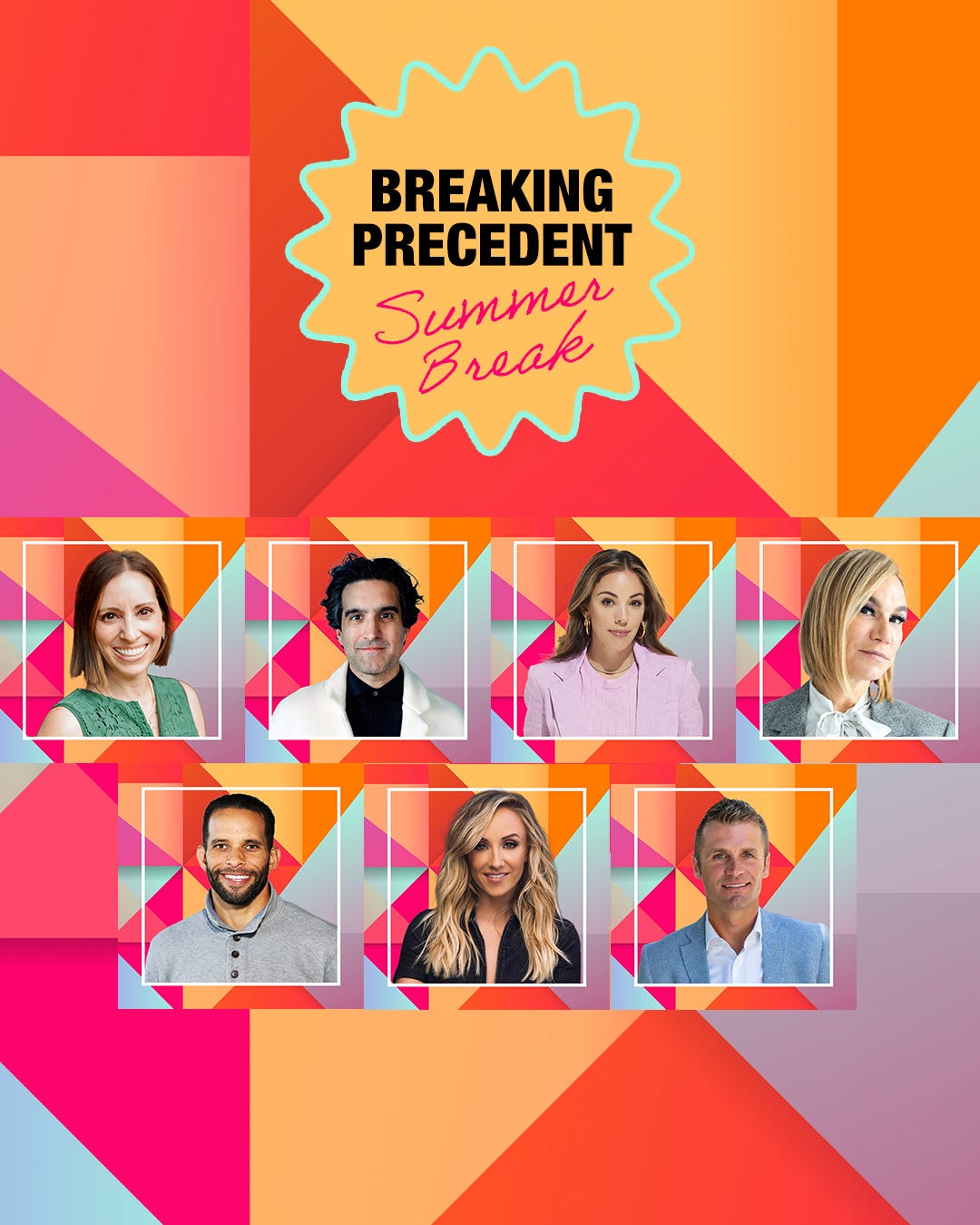
This week pairs with our latest episode of Breaking Precedent: "Summer Break: Breaking the Scorecard - What Comes After Success." If this resonated, the episode goes deeper on how to approach the day after you reach your goal.


